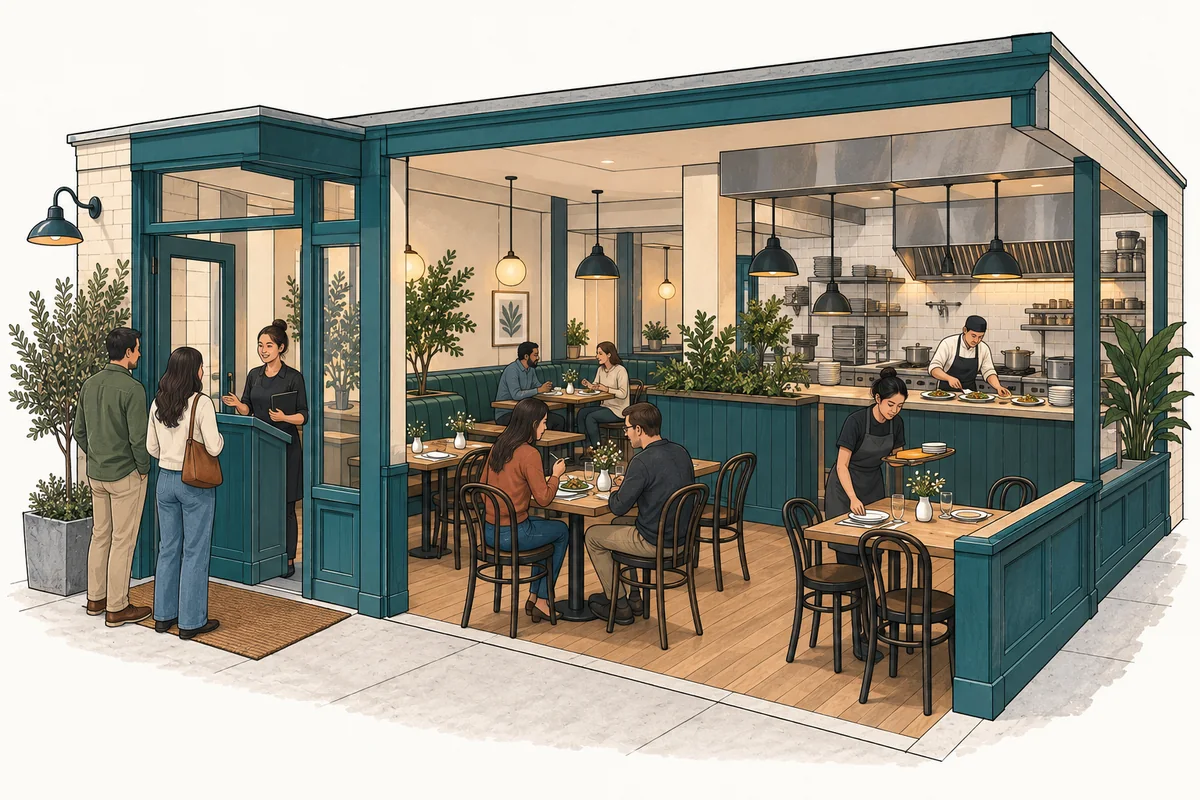
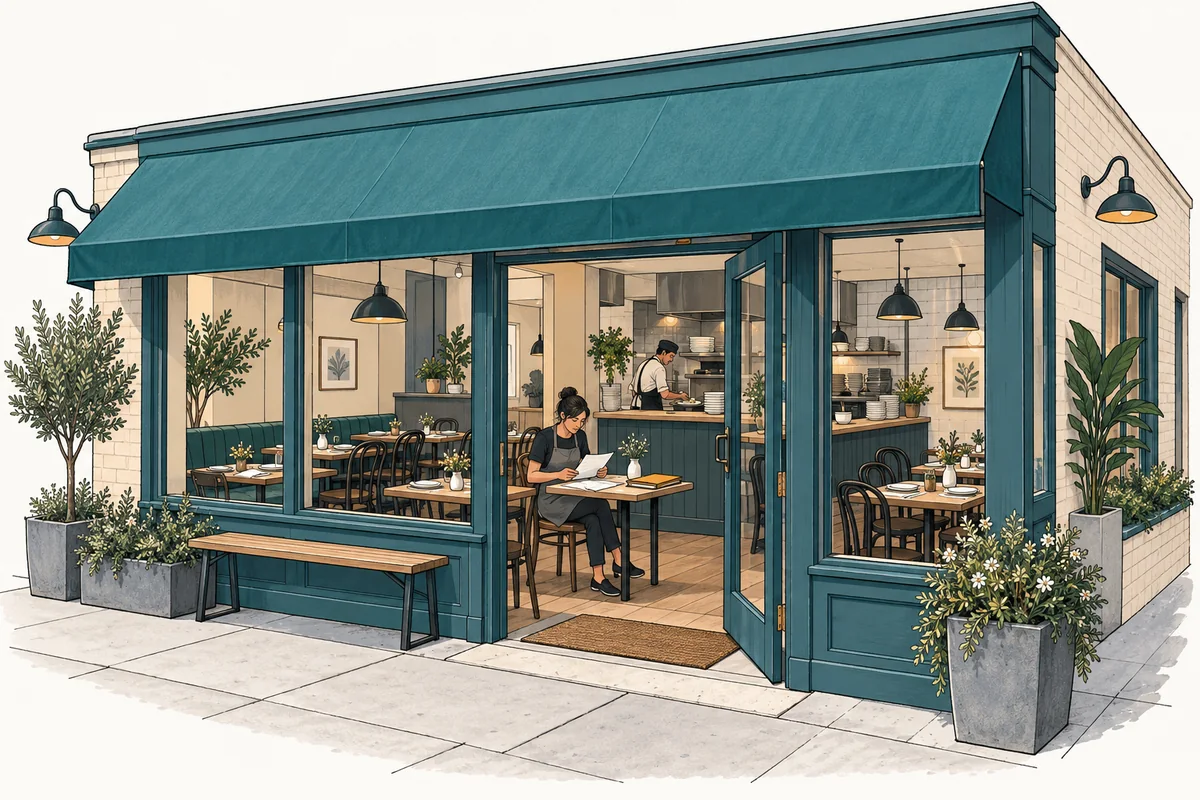
The client-site contract cafeteria case represents one operator-at-risk cafeteria at a 1,000-employee U.S. site. It uses host-provided premises and equipment. The examples below are its selected 2027 Base assumptions in USD, rather than a signed contract or the full cost of the employer’s meal program.
Is the subsidy a second sale?
The operator earns $8 from the employee and $4 from the client for each served lunch, totaling $12. Both payments support the same delivered meal. The model treats the operator as the principal food provider bearing food, staffing, and operating risk.
There is no additional management fee, guaranteed minimum client payment, or agreement to reimburse an operating deficit. A forecast for a management-only contract would need different revenue and responsibility assumptions; this case does not become that arrangement merely because the client pays part of the bill.
The payment bases also differ. The selected employee card fee is $8 × 1.08 × 2.6% + $0.15 = $0.37464 per meal, while the subsidy arrives by fee-free transfer. The 1.08 factor is a modeled processing-base allowance, not a statement of applicable tax law.
How many eligible employees actually become served meals?
At mature 2027 settings, 1,000 eligible employees × 60% onsite attendance × 50% participation produces 300 lunch requests per open day. That is a demand calculation before the launch factor and service constraints, not a promise to sell 300 meals every day.
The model counts Monday–Friday operating dates and applies a launch ramp. Host equipment, paid cooks, serving staff, checkout lanes, and seats then limit fulfillment. All lunches conservatively consume seat capacity, and unserved requests expire rather than generating subsidy revenue.
Employee price, subsidy, attendance, and participation are independent inputs. Increasing the client subsidy does not automatically raise participation in this workbook. A demand response would need evidence from the proposed employee population and a corresponding explicit change to the participation assumption.
Who funds the premises and operating work?
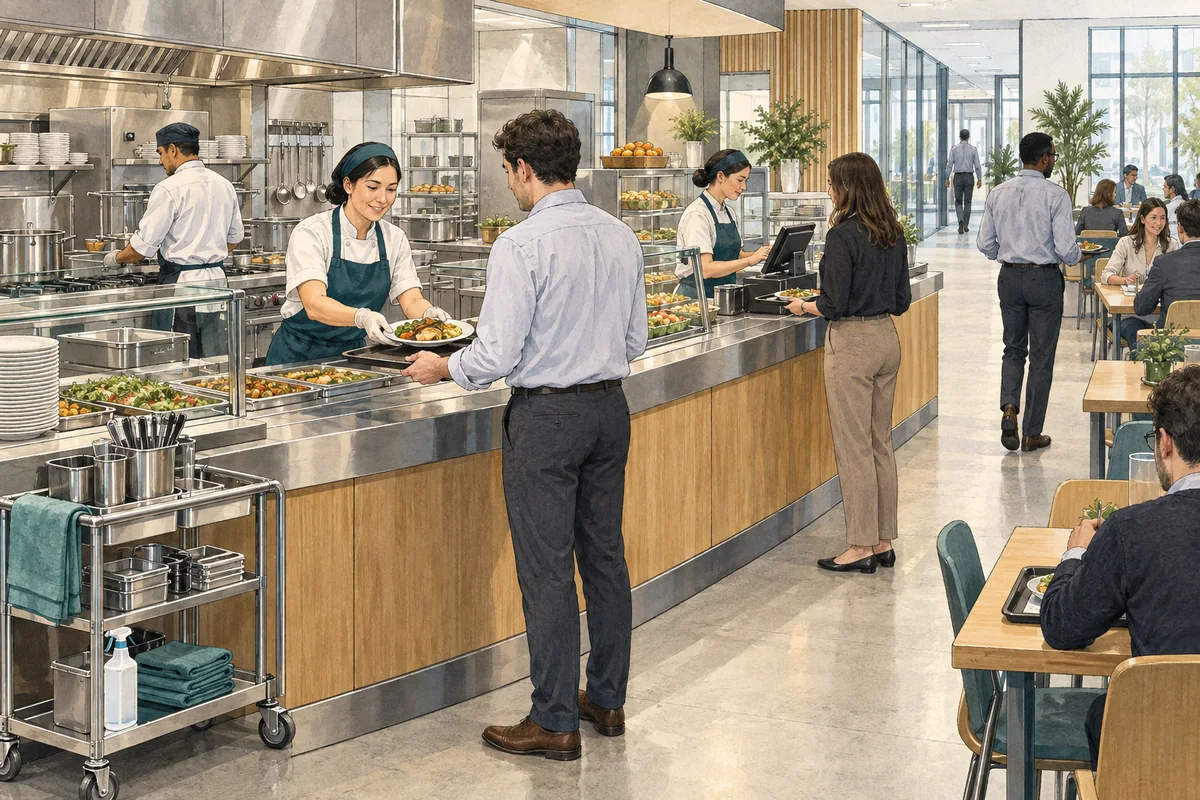
The host supplies the equipped cafeteria, so the operator’s budget excludes major costs that a standalone restaurant would normally have to address. This narrow investment scope matters when interpreting the case’s operator margins and capital requirement.
On a narrow screen, scroll within the table to read each responsibility.
| Item | Client or host responsibility | Operator responsibility |
|---|---|---|
| Premises and dining | 3,000-square-foot equipped cafeteria and 120 seats | Separate administration workspace allowance |
| Permanent kitchen assets | Kitchen and serving equipment | Portable tools, service utensils and POS devices |
| Building services | Utilities, maintenance, building cleaning, waste collection and onsite connectivity | Food-contact cleaning supplies and operator support costs |
| Food and labor | $4 subsidy per served lunch | Ingredients, paid owner and employees, and operating risk |
| Customer receipts | Client subsidy transfer | Employee payment collection and the selected processing cost |
The selected operator begins with six paid FTE, including the working owner. Host-provided equipment does not supply free cooks or service staff, and the owner’s management work is paid. Those scheduled wages continue to matter when attendance or participation disappoints.
Initial operator-owned capital is $22,000, largely tools and devices. That amount excludes the client’s kitchen and building investment. Comparing it directly with a fully fitted independent restaurant would obscure who funded the resources that make the meal service possible.
Does the revenue split describe the collection schedule?
No. The workbook uses 12 receivable days on total sales as a blended proxy for employee settlement and slower client invoices. It does not maintain separate debtor ledgers, invoice dates, or an exact aging schedule for the two payers.
For an actual contract, identify how subsidy eligibility is verified, when invoices are issued, when payment is due, and which disputes can delay settlement. A $12 earned meal does not establish that all $12 is immediately available to pay wages and suppliers.
Review the contract’s responsibility matrix alongside those cash terms. If the operator must assume a host expense, accept slower payment, or operate with lower attendance, update the relevant cost, working-capital, and demand inputs. The financial-assumptions guide explains why changing a revenue headline alone does not complete that revision.