What is the membership actually promising?
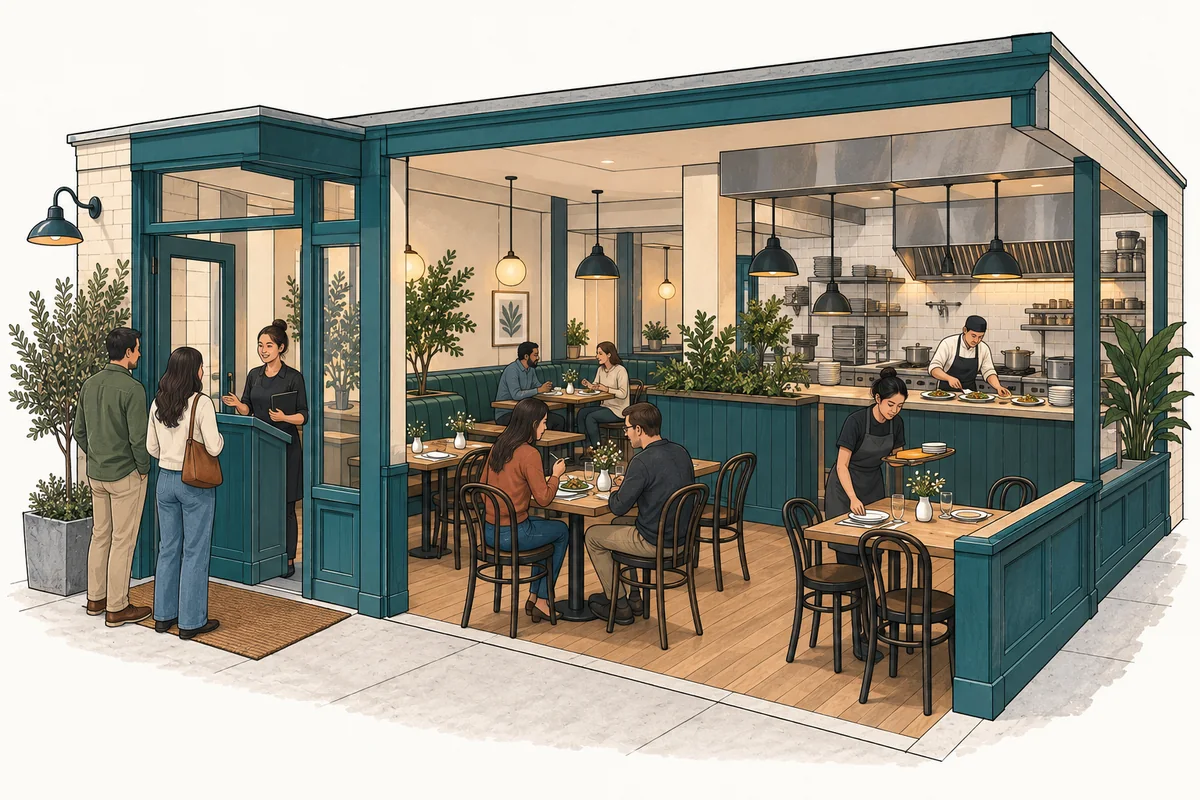
The saved U.S. Coworking Coffee Shop case uses monthly memberships, day passes and three paid drink families. It has 48 shared seats, six staffed ten-hour days and an April 2027 opening. These are Base planning inputs for January 2027–December 2031, not measured demand for a particular property.
A member-month assumes eight visits, three hours per visit and one included drip drink per visit. That reserves 8 × 3 = 24 seat-hours and eight included drinks for one full member-month before peak weighting. At the $129 opening membership price, those included drinks are part of the service; adding eight retail drink charges would duplicate revenue.
Which customers receive scarce capacity first?
The model allocates seat-hours and preparation minutes to members first, then passes, then cafe demand. New members contribute half a service month. Cancellations, pauses and resumptions change the account cohort, while a four-week commitment budget and account ceiling constrain admission. Those rules prevent a short month from admitting promises the operation cannot maintain.
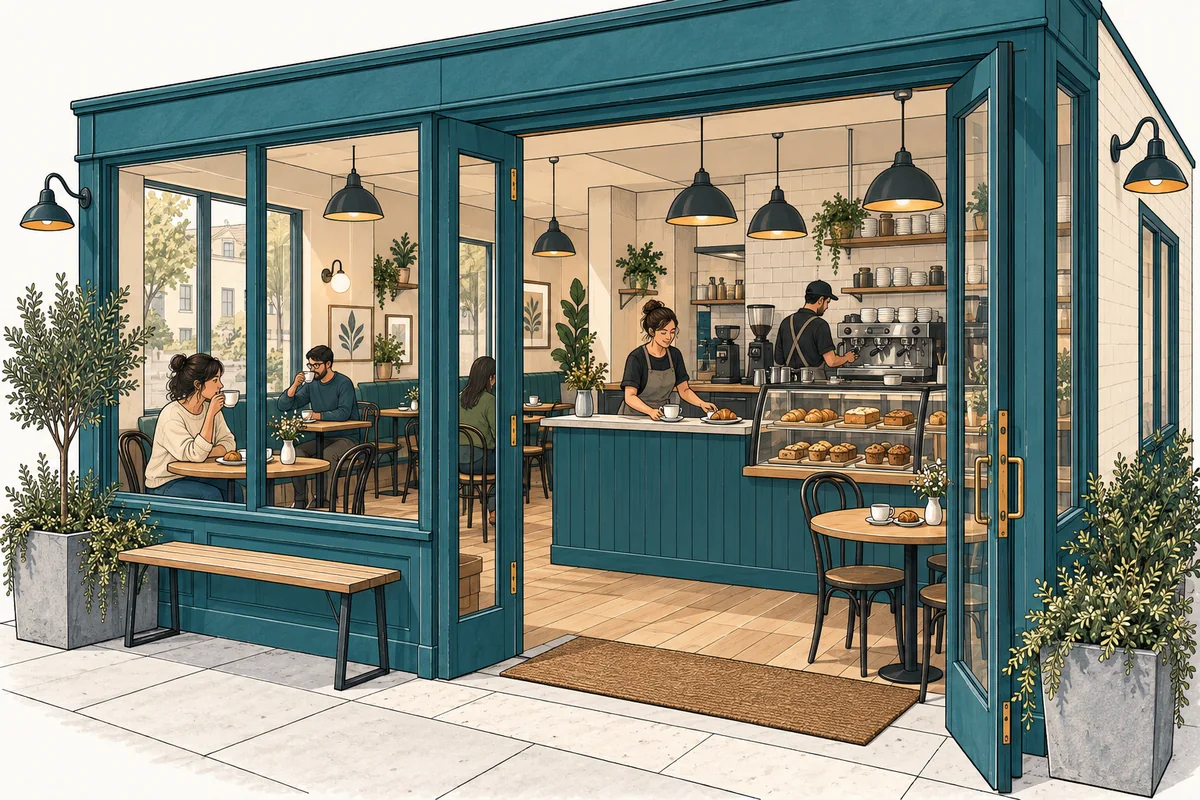
A day pass reserves six hours and one included drip drink in the saved case. Walk-in cafe orders use their own drink mix; only the seated share consumes workspace seat-hours. Takeaway orders avoid seat demand but still require preparation time. Spare seating alone cannot create barista capacity.
How should a shared-capacity table distinguish the offers?
| Offer | Seat commitment | Drink treatment |
|---|---|---|
| Full member-month | Eight visits × three hours, before peak weighting | Eight included drip drinks; no second sale |
| Day pass | Six hours | One included drip drink |
| Cafe order | Seated share and dwell assumption | Paid drink and any separately priced food attachment |
The table describes commitments, not an executable desk-booking or shift roster. The 1.60 peak factor and selected visit behavior are analytical inputs. Test crowded periods, staff breaks and actual usage before treating average monthly availability as an operating promise.
What costs remain after a drink becomes included?
Included drinks still consume beans, preparation minutes and paid coverage. The case separately tracks physical beans and uses a 30% retail-equivalent consumption proxy for financial materials. That is a disclosed simplification, not a detailed ingredient bill of materials and not a claim that membership revenue has no product cost.
Use the workbook to test the order of allocation, visit intensity and residual paid sales. Compare membership growth with monthly cash as well as seat occupancy. More accounts can displace another cohort’s contribution without improving the cash floor, especially when service intensity or staffing differs from the saved inputs.