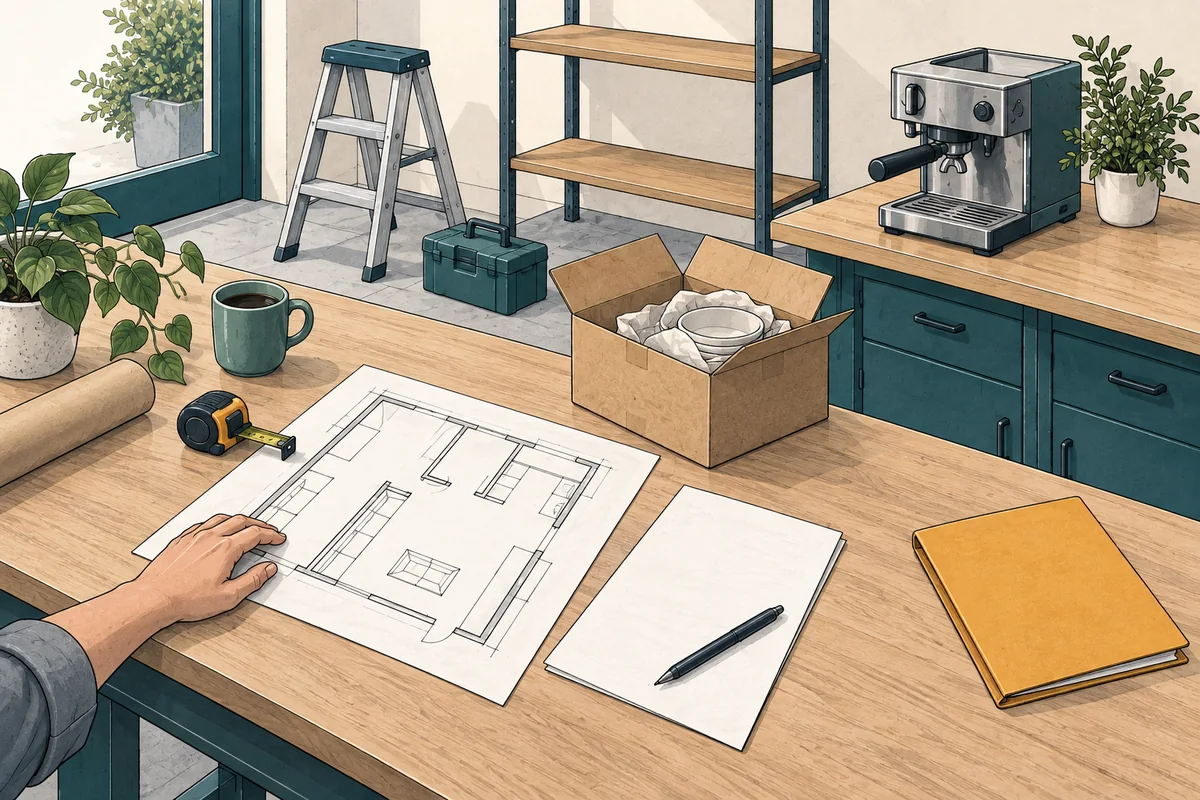
The seated coffee shop case uses 32 seats, 1,600 square feet, beverages, and bought-in pastries. It does not include a separate takeaway queue, delivery operation, or in-house bakery. Its demand, dwell time, and financial results are planning selections. The coffee shop business idea guide helps decide whether a seated cafe is the right format before you commit to this opening sequence.
What kind of visit are you designing?
Choose a guest promise that the space can deliver: a quick seated break, a conversation over coffee, or a place to spend longer working. These uses can coexist, but they affect table availability, noise, power access, cleaning, and the pace of ordering. Write the intended experience before drawing a seating plan or choosing an espresso machine.
Observe candidate neighborhoods at the times you expect to trade. Record relevant passersby, competing offers, visible occupancy, and changes across weekdays and weekends. Supplement observation with conversations or a permitted small-scale product test. A busy street is evidence to investigate; it does not establish how many people will enter, buy, and take a seat in your shop.
The source case assumes ten selling hours and a 75-minute average guest stay. Do not turn that average into a customer time limit or a forecast validated by observation. Set any seating policy around your intended hospitality and customer needs, then test whether its commercial assumptions remain workable.
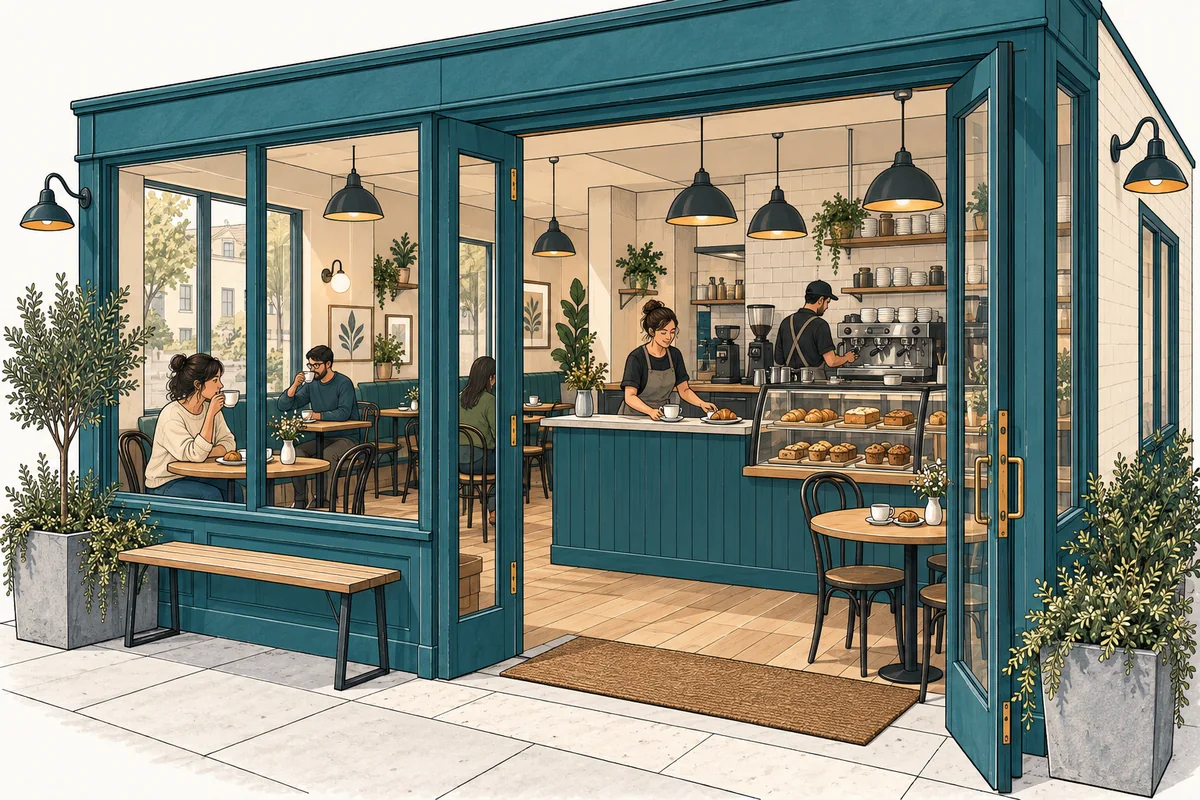
Does the site work as both a cafe and a production bar?
Evaluate the bar as a work route: order entry, cups, grinding, brewing, milk, finishing, handover, washing, and restocking. Place the proposed equipment on a scaled plan and confirm power, water treatment, drainage, ventilation where relevant, and service access with the appropriate specialists. A machine that fits on the counter can still leave too little room to work or maintain it.
Also walk the customer route from entrance to ordering, seating, restroom, and exit. U.S. Department of Justice guidance identifies accessible routes, service counters, and dining surfaces as relevant parts of public-facing businesses. Have the proposed layout assessed for the applicable requirements instead of inferring accessibility from the presence of a ramp. DOJ guidance for businesses open to the public.
Confirm local use, food-service approval, signage, and inspection requirements with the responsible authorities. Requirements vary with location and activity; the SBA directs owners to state and local agencies for that check. A bought-in pastry menu still needs an agreed receiving, storage, handling, and service process. SBA launch guidance.
What should you settle with coffee and pastry suppliers?
Choose recipes and supplier specifications together. Measure the coffee dose, milk and syrup quantities, cup sizes, and preparation sequence for the menu you will actually sell. Ask equipment and coffee suppliers to demonstrate the proposed setup using those recipes. Record training, maintenance access, spare parts, and what happens when a machine is unavailable.
For pastries, agree order minimums, delivery days, receiving condition, shelf life, storage instructions, ingredient information, and responsibility for damaged deliveries. Track unsold products separately from rejected deliveries. The model buys finished pastries; adding ovens and production staff would change the business rather than simply replacing a supplier expense with free inventory.
On a narrow screen, scroll within the table to compare each opening commitment with its practical test.
| Commitment | Test or evidence | Opening decision |
|---|---|---|
| Espresso drinks | Repeat recipes on the installed setup, including cleaning and milk changes. | Keep drinks the funded team can make consistently. |
| Drip and cold brew | Document batch preparation, storage, service, and discard procedures for local review. | Choose batch sizes and replenishment rules from actual sales tests. |
| Bought-in pastries | Compare delivered quality, sell-through, unsold stock, and supplier order terms. | Set the opening range and ordering cadence. |
| Table service and clearing | Observe tray return, washing, reset, and guest questions during a rehearsal. | Assign coverage outside drink preparation. |
| Equipment support | Confirm installation, commissioning, maintenance, and an outage response. | Decide which equipment and service commitments are necessary at launch. |
Can the paid team cover the whole trading day?
Schedule the work before doors open and after guests leave. Include dialing in the espresso setup, receiving pastries, preparing batches, replenishing milk, cleaning, and closing. Then cover the selling period with breaks and relief. A shift with one person available cannot assume that person is simultaneously making drinks, clearing tables, receiving a delivery, and resolving a payment problem.
The case funds 5.25 full-time equivalents, including the owner-manager, baristas, and counter/clearing work. Management and clearing hours do not count a second time as barista production hours. Use the headcount budget as a starting point for an actual weekly roster, with current local pay and employment requirements checked for each role.
Rehearse a varied basket rather than a line of identical espressos. Include a pastry, a milk substitution, a batch refill, and guests who need an explanation. The seating and barista capacity guide explains how the model represents resource limits; an opening trial tells you whether its chosen inputs fit the operation.
What must the opening budget pay for besides the machine?
Price the complete installed bar and the premises work that makes it usable. Confirm freight, installation, water treatment, refrigeration, ice, sinks, washing, furniture, storage, signs, and payment hardware. Keep refundable deposits, pre-opening expenses, equipment purchases, and retained cash identifiable, because they have different timing and accounting treatment.
The source case budgets $161,000 of initial capital assets and $218,000 of equity, with no debt. It assumes a suitable second-generation site and no lease deposit. These are case values rather than a coffee-shop price range. Actual deposits, a different fitout, or pre-opening payroll need to enter your own dated cash forecast.
The saved forecast places opening and initial asset spending in the same month. That convention is not an installation schedule. Prepare the real sequence with the landlord, installers, and staff, and test the cash effect of delays or a slower sales ramp. See the financial assumptions guide for recording which inputs are quotes, observations, or decisions.
What evidence should trigger opening and later expansion?
Open when the approved site, commissioned equipment, supplier deliveries, trained roster, and funded cash plan support the menu being offered. Test order entry, receipts, refunds, cash handling, and how card receipts reach the bank. Compare payment records with actual settlements; a sale and an available bank balance need separate checks.
During the first operating period, log occupied seats, guest stays, items per visit, preparation delays, unsold pastries, and paid hours. Identify whether the limiting issue is demand, the bar, seating, or clearing before buying more equipment. A larger machine will not solve tables that remain unavailable or an opening offer that attracts too few paying visits.
Use that evidence to decide whether to adjust the menu, seating mix, ordering quantities, or hours. If takeaway becomes a material opportunity, plan its queue, packaging, customer flow, and shared bar workload explicitly instead of adding its sales to a forecast built entirely around seated guests.