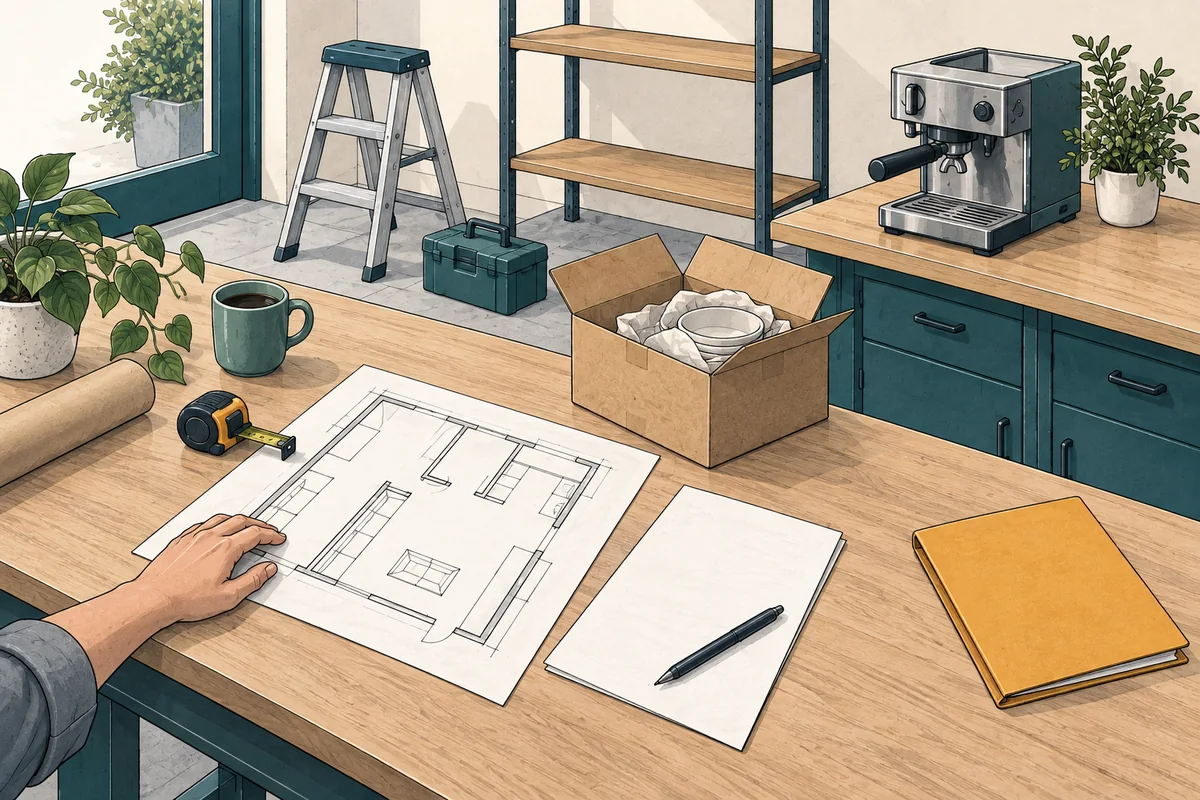
The seated coffee shop case describes one U.S. cafe with 32 seats and a paid owner/manager. It sells beverages and bought-in pastries to seated guests, with no separate takeaway demand. Its Base forecast covers January 2027–December 2031 in USD; the operating values below are selected assumptions, not observed cafe averages.
How many guests can the seats accommodate?
The case allows ten open hours per day and 75 minutes of occupancy per guest. Its seating ceiling is 32 × 10 × 60 ÷ 75 = 256 guests per open day. That calculation allocates available seat-minutes; it does not establish that 256 customers will arrive or receive their orders.
The table changes only dwell time to show what that one constraint does. The 60- and 90-minute rows are illustrative alternatives derived from the same seat count and hours, not completed workbook scenarios. Other operating limits and the customer experience still need review.
On a narrow screen, scroll within the table to read all columns.
| Dwell assumption | Calculation | Seating ceiling |
|---|---|---|
| 60 minutes, illustrative alternative | 32 × 10 × 60 ÷ 60 | 320.00 |
| 75 minutes, saved Base input | 32 × 10 × 60 ÷ 75 | 256.00 |
| 90 minutes, illustrative alternative | 32 × 10 × 60 ÷ 90 | 213.33 |
These are average planning ceilings rounded to two decimals, not a reservation schedule. The calculation does not describe the timing of arrivals, whether parties can share tables, or unused spaces between occupied seats. A floor layout and observations of the intended service would be needed to judge those practical effects.
How does the drink mix use barista time?
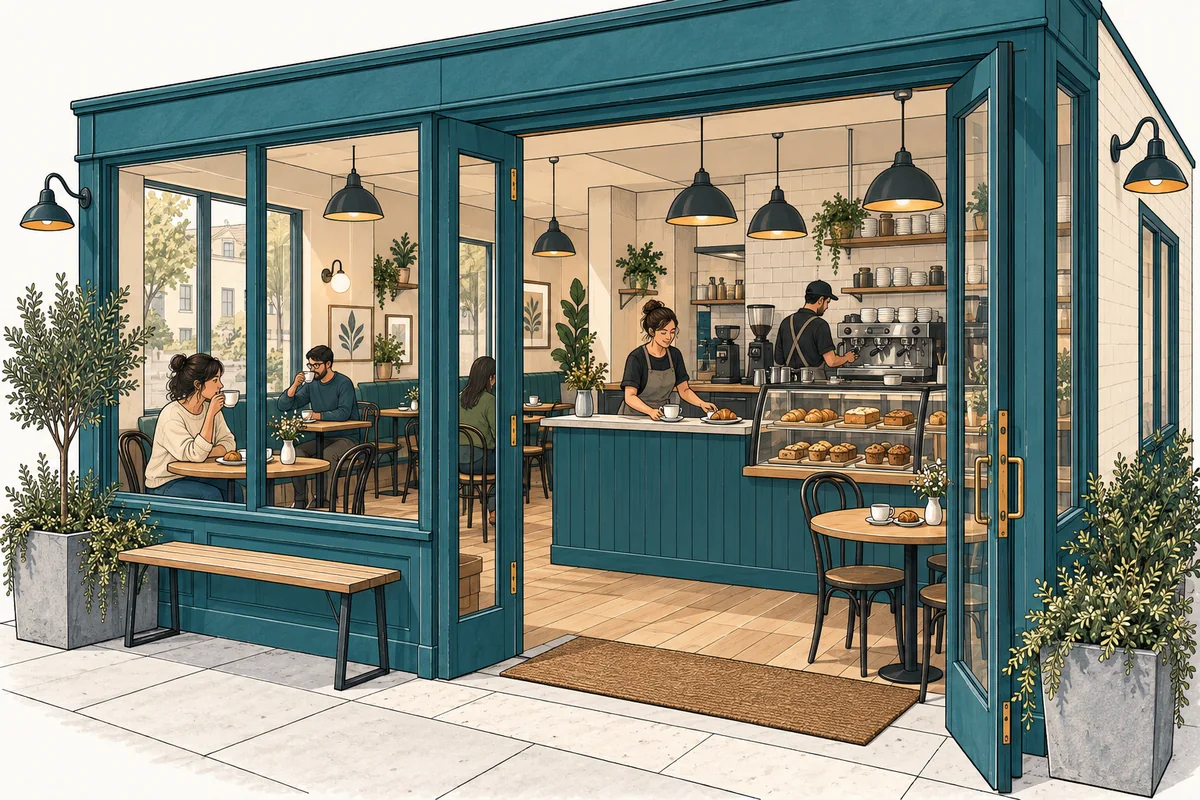
Preparation workload depends on what each guest buys. This case assigns guests to mutually exclusive espresso, drip-coffee, and cold-brew cohorts at 60%, 25%, and 15%. Each guest buys 1.10 beverages of their cohort type and 0.55 pastries; the pastry component is included once in each complete ticket.
Selected preparation times are 2.5, 0.75, and 1.2 minutes per beverage, plus 0.30 minutes per pastry. The weighted workload is 2.21925 preparation minutes per guest: 1.10 × (60% × 2.5 + 25% × 0.75 + 15% × 1.2) + 0.55 × 0.30. It is an assumed work requirement, not a measured national speed standard.
Three barista full-time equivalents fund preparation at 2,080 paid hours each per year and a 75% productive-time assumption. The workbook compares the resulting available time with guest workload over its calendar periods. The owner/manager and counter-clearing staff have separate jobs; their hours are not added again as barista capacity.
Why check espresso equipment separately?
Paid preparation time and equipment output are different constraints. The case has a selected espresso capacity of 60 drinks per hour. Only espresso drinks use that ceiling, so converting it to a guest limit must preserve the espresso share and drinks per guest rather than treating every guest as one espresso.
A faster espresso machine cannot create barista hours, free a seat, or increase the number of people seeking a visit. Similarly, adding a barista does not change the dwell assumption or machine capacity automatically. Test the resource that limits fulfilled guests, then inspect whether another resource becomes the next limit.
What should change in a realistic growth scenario?
Start with the customer experience and the work it requires. A shorter intended visit may imply a different menu, service routine, or ticket. More pastries or a larger espresso share may raise revenue per guest while also increasing preparation work and ingredient needs.
Keep the seating and preparation checks in the same period before translating guests into revenue. The case multiplies fulfilled guests by complete cohort tickets; it does not add pastry buyers as a second independent guest stream. Revenue is earned at sale and collected in the same month, with no customer advances in this case.
- Record the seat count, open hours, dwell assumption, and source of demand.
- Recheck drink mix, preparation workload, and paid staff coverage together.
- Inspect fulfilled guests, payroll, ingredient costs, and monthly cash after a change.
The assumptions review guide explains how to document an operating change. Use the seated coffee shop model to connect those constraints to the financial forecast; the seating calculation alone is not a sales forecast.