The four selected U.S. planning cases below separate those choices. They are not a league table of cafe returns or a forecast of local coffee demand. Use them to identify the working day and customer relationship you want to build.
Who is the customer, and why are they there?
A seated guest may value a place to meet or take a break, while a kiosk customer may prioritize a convenient collection point. Those are hypotheses to test with the intended audience. Neither a busy building nor a well-designed room proves that enough people will buy your offer.
Workplace service introduces a further distinction: the buyer is the employer, while employees consume the drinks. The selling process must therefore address the organization’s requirements as well as the people using the equipment.
On a narrow screen, scroll within the table to compare the customer and work behind each format.
| Format | Who pays? | Work beyond making coffee | Evidence to seek |
|---|---|---|---|
| Seated cafe | Visiting guests | Hospitality, pastry handling, clearing, and premises care | Reasons to visit, stay, buy, and return |
| Takeaway kiosk | Walk-in and preorder customers | Setup, payment, handover, and host coordination | Reachable footfall and completed orders during useful hours |
| Mobile coffee truck | Customers at the selling pitches | Travel, setup, cleaning, vehicle care, and pitch arrangements | Access and paid demand at each stop |
| Workplace service | Employers under a service agreement | Account sales, stocking routes, equipment ownership, and maintenance | Contract scope, eligible headcount, usage, and service access |
The table is also a skills check. Someone attracted to a welcoming customer space may find route maintenance less appealing. Someone comfortable with account sales and equipment service may prefer workplace contracts to continuously staffing a retail counter.
Does your idea need a room or just a handover point?
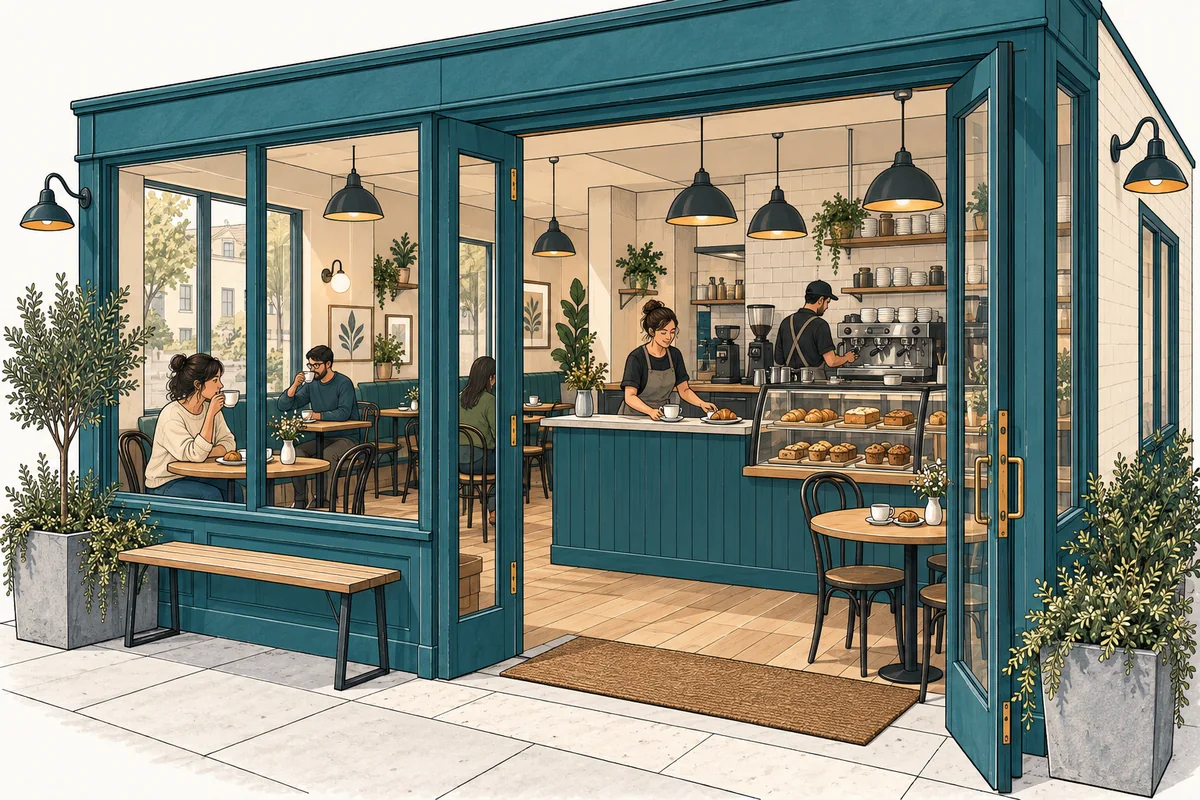
The seated coffee shop case sells beverages and bought-in pastries to seated guests. It does not assume that pastries are baked in-house. Seating time, drink preparation, and paid barista capacity all matter, while counter service and clearing remain separate funded work.
The takeaway kiosk case sells one drink per order without seating or a food program. A smaller footprint narrows the offer; it does not make preparation, handover, cleaning, administration, or relief disappear. Its paid-hours calculation explicitly reserves time for those duties.
Choose between them by testing the service promise. If a customer has a reason to stay, investigate whether that experience supports the occupied space and service. If the promise is convenient collection, observe the full order-to-handover process rather than assuming every passing person is an available customer.
Would mobility or employer contracts change the business you want?
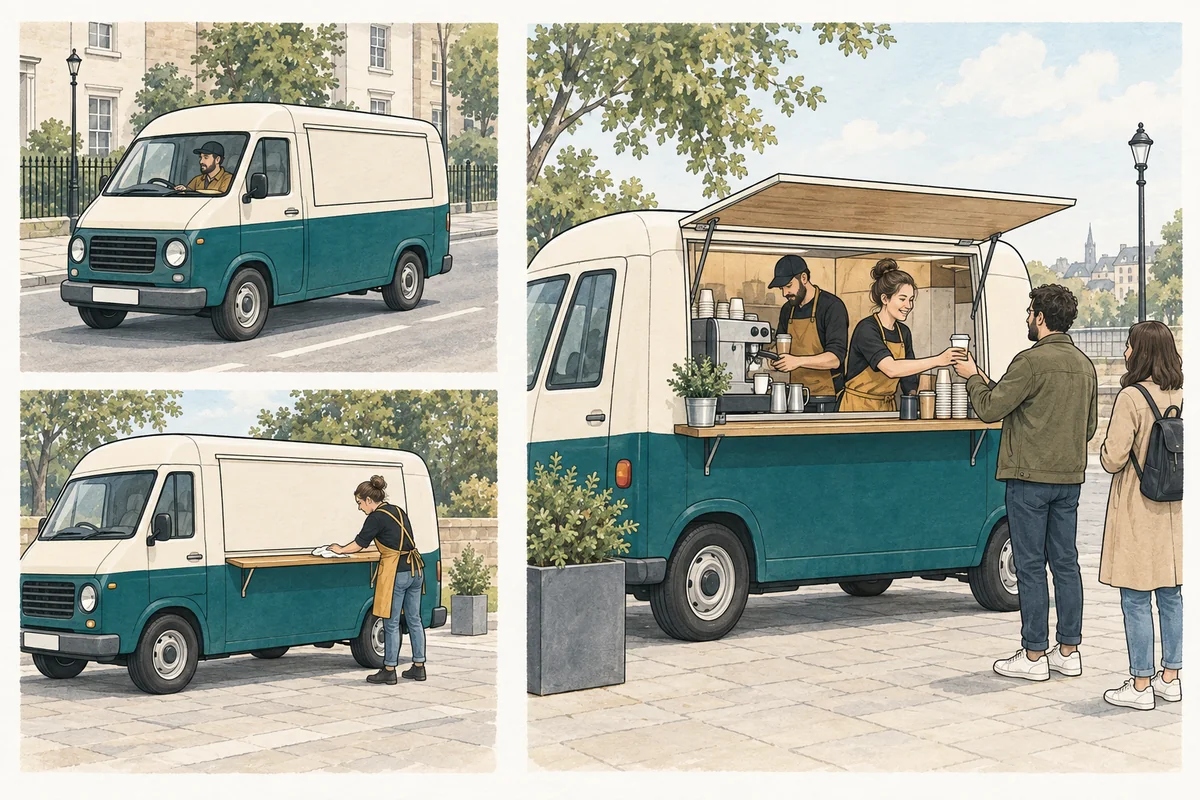
The mobile coffee truck case uses the same van and crew at morning and afternoon pitches. Driving between them uses time, fuel, and attention without selling drinks. Mobility therefore creates a location-management job alongside beverage service.
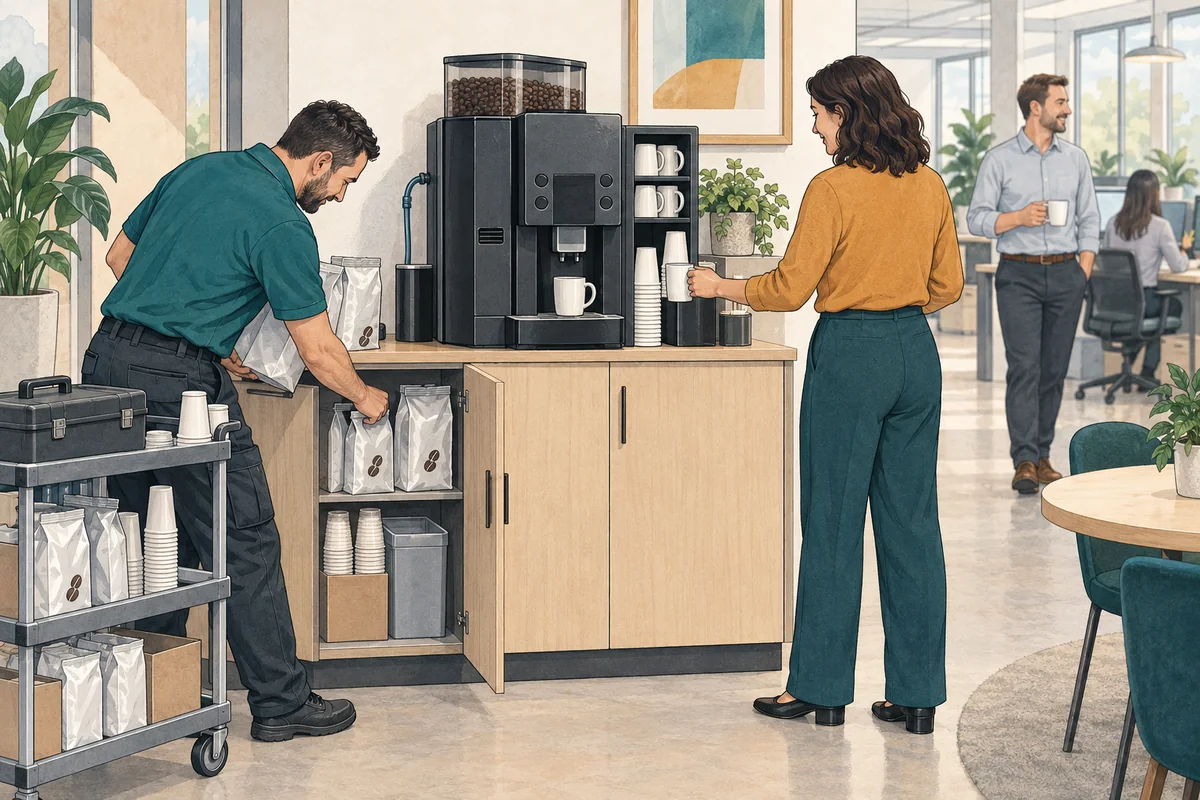
The workplace coffee service case buys automatic stations for employer sites and funds stocking and technical service. In this selected arrangement, the employer supplies utilities and handles specified daily cleaning, refilling, and milk tasks. Those responsibilities belong in the agreement; equipment ownership alone does not define the service.
These are different reasons to leave the conventional cafe format. A truck needs viable selling stops. Workplace service needs organizations willing to buy the proposed package and accept its responsibilities. Neither choice should be based only on avoiding a retail lease.
What exactly earns revenue?
Retail cafe and kiosk sales arise when customers receive their orders. In the workplace case, revenue instead follows eligible employees at serviced sites. Included drinks create ingredient and service demands, but employees do not pay a second retail price for each cup.
For example, the selected 2027 Base workplace mix is 60% of employees at $20 per month and 40% at $25. The blended price is $22; a fully active 100-employee site therefore invoices $2,200 per month. This is a model assumption, not a current supplier offer or evidence that an employer will accept that price.
More consumption under that agreement can raise costs without increasing the invoice. More retail purchases can raise both sales and workload. Keep the billing unit separate from consumption before deciding that a particular setting has attractive unit economics.
What would justify putting the idea on your shortlist?
Collect evidence for the specific buyer and location. The SBA’s planning guidance asks businesses to investigate demand, customer location, and alternative pricing. For coffee, translate those questions into the actual visit, stop, or employer account you propose to serve.
A cafe concept needs evidence of repeat visits and the intended guest experience. A kiosk needs usable demand during its operating hours. A mobile route needs each stop to justify its access and travel commitment. Workplace service needs credible account prospects and a service workload that the team can cover.
Confirm local permissions and host or pitch terms for the selected activity; requirements depend on the business and location, as the SBA explains. Then examine staffing, equipment, and cash requirements with that scope fixed. The format that fits best is the one whose customer promise you can support with evidence and a workable operating plan.