The own-venue events case operates a leased 6,000-square-foot banquet venue with owned fitout and equipment. “Own-venue” means the operator controls the event premises; it does not mean property ownership. Buffet food, soft drinks, furniture, linens, and ordinary service are included. Alcohol, bartending, entertainment, photography, and lodging are excluded. The event venue business idea guide considers whether this format fits your business.
What exactly will a customer be booking?
Define the service in terms a customer and an event captain can both use. Specify the rooms, access times, guest allowance, food and drink, furniture, linens, staffing, setup, and reset. List what the customer or an outside vendor must supply. A package price is hard to evaluate when its included work changes during every sales conversation.
Prepare a sample event order that turns the package into operational instructions. Include the floor arrangement, service sequence, final guest guarantee, dietary requests, delivery access, vendor contacts, and change deadlines. Make clear who is authorized to agree to a change and how it is priced and passed to the team.
The planning case includes 100 guests in its base package and uses a baseline guarantee of 120. Those are commercial assumptions, not a venue capacity assessment. Use the package to define the workload you sell, and test the premises and resources before deciding the maximum guarantee you will accept.
Is the premises suitable for the events you intend to sell?
Confirm the actual use, occupancy conditions, food-service approvals, fire and building requirements, hours, noise restrictions, parking arrangements, and accessibility with the responsible authorities and project specialists. The SBA’s licensing guidance emphasizes location and activities; an event venue’s address and intended use must drive the inquiry. SBA launch guidance.
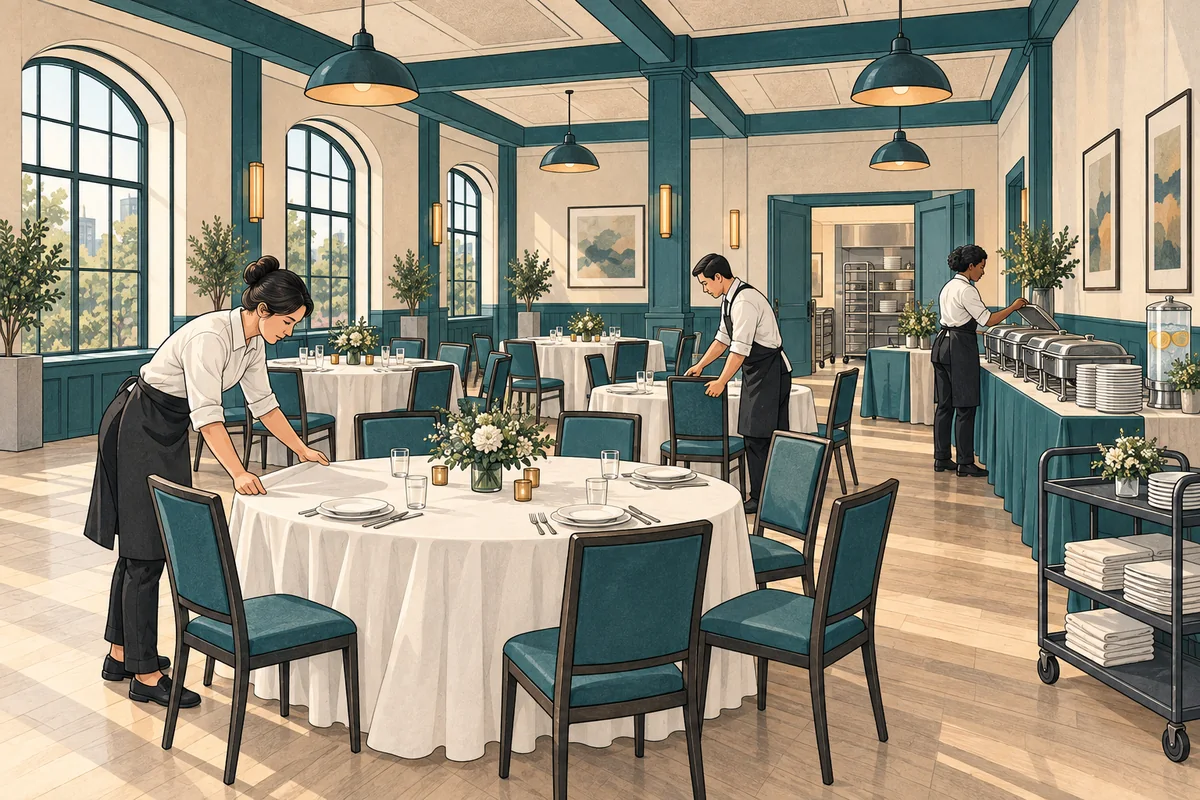
Evaluate the layout with a realistic event setup, including buffet, service stations, circulation, toilets, storage, and vendors. A count of chairs that physically fit is not a permitted guest limit. The source case’s conditional ceiling of 150 guests is a planning assumption, not a signed-off occupancy figure for a real building.
Check accessible customer use throughout the experience, including arrival, routes, dining, and service. DOJ guidance addresses physical access and equal access to the goods and services of businesses open to the public. Have the layout and operating policies reviewed for the actual project. DOJ guidance for businesses open to the public.
How much of the calendar does one event occupy?
Sell a complete reserved block, including the work on either side of the guest event. In the case, three hours of setup + six hours of service + one hour of reset = ten reserved hours. This is one modeled exclusive reservation, not a standard event duration or permission to operate at particular hours.
Walk through receiving, furniture setup, food preparation, guest service, breakdown, washing, cleaning, and storage. Record the people and spaces occupied by each task. A calendar may show an unused evening while the team or kitchen is still committed to preparation or recovery from another booking.
On a narrow screen, scroll within the table to follow the commitments attached to one booking.
| Stage | Decision or confirmation | Operational consequence |
|---|---|---|
| Inquiry and availability | Identify event type, date, guest range, and requested inclusions. | Check both calendar space and resources before making a promise. |
| Contract and advance | Agree scope, payment dates, cancellation, rescheduling, and responsibility for changes. | Create a commitment record and a separate customer-advance record. |
| Final event order | Confirm guarantee, menu, layout, vendors, and access times. | Release the purchasing, kitchen, staffing, and setup instructions. |
| Setup and service | Assign authority for readiness checks, guest issues, and requested changes. | Keep sales promises and delivered work aligned. |
| Reset and closeout | Record actual work, damages, final charges, receipts, and unresolved issues. | Restore usable capacity and reconcile the booking before reusing the date assumptions. |
Can the kitchen and paid team deliver the largest accepted event?
Test a representative event from preparation through final washing with the proposed equipment and crew. Include staff meals, service supplies, loading, setup, clearing, and cleaning. A menu tasting alone does not establish that the kitchen can produce and serve the promised guest count while maintaining the required quality and handling procedures.
The case models kitchen throughput and funded capacity for management, coordination, chefs, and event roles. Its rotating roster is not the same as full-time headcount. Build an actual event and weekly staffing schedule, including routine administrative work, training, relief, and the effect of several busy days together.
Review individual hours and applicable pay rules before accepting that schedule. DOL guidance explains federal overtime obligations for covered nonexempt employees; state requirements and each role’s circumstances also need checking. Do not assume a job title or a large roster solves the payroll consequences of concentrated event work. DOL overtime guidance.
What booking terms must be settled before accepting money?
Agree a written process for the advance payment, balance, guest changes, cancellation, rescheduling, outside vendors, and any damage charges. Have the terms reviewed for the jurisdiction and proposed service. Then make sure staff, booking software, invoices, and the cash forecast use the same definitions and dates.
The source case assumes an advance on the base package, refunds that original advance on cancellation, and earns event revenue on completion. Those are model terms, not recommended legal language. Rescheduling is not an implemented control in the case. If your terms permit carrying a payment to another date, document and model that obligation instead of assuming it is already represented.
Maintain a booking ledger that separates payments received, earned sales, refunds due, and remaining service obligations. Trace it to bank settlements and the event calendar. The bookings, deposits, and cash guide works through the case’s payment example; the opening task is to make your actual contract, operating process, and financial treatment agree.
What proves the venue is ready to open for booked events?
Complete a full setup-to-reset rehearsal using the intended floor arrangement and guest workload. Include a delayed vendor, a guest-count change, and a problem that needs the event captain’s decision. Record who can authorize a remedy and whether the kitchen, service team, and coordinator receive the same information.
Price the required fitout, equipment, furniture, linen inventory, professional work, training, and opening operations using the real site scope. The case assumes leased second-generation premises and excludes a property purchase. Confirm deposits, landlord responsibilities, installation work, and supplier terms separately; an empty room ready to decorate is not the same as a funded, staffed venue ready to deliver.
Before taking binding bookings or advances, establish which promises can be supported by completed approvals and a credible opening schedule. Keep unresolved site or funding dependencies visible in the contracting decision. After launch, compare event labor, prepared quantities, reset time, changes, and settlements with the plan. Use those records to set the next booking limit instead of accepting every date the sales calendar appears to offer.