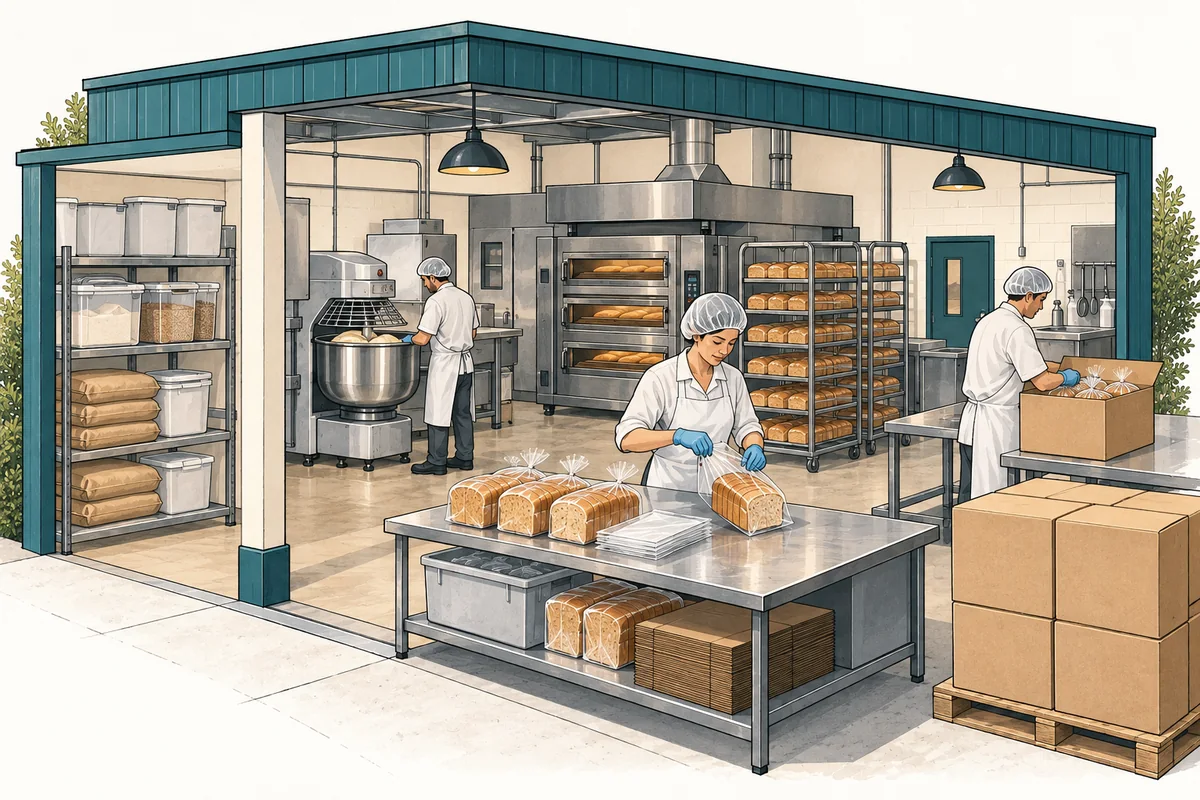
The bakery cafe case combines production with seated counter-order service: 48 seats in 2,400 square feet, bakery items, and drinks. It excludes wholesale, delivery, and takeout sales. Its quantities and costs describe one U.S. planning case. If you are still choosing an operating format, read the bakery business idea guide.
Which products can share a workable production day?
Choose a launch range by process as well as customer appeal. Group products by mixing needs, fermentation or proofing, oven conditions, cooling, finishing, and storage. Identify the items that use the same equipment at the same time. A product with a strong selling price may add a difficult early shift or interrupt an otherwise efficient bake sequence.
Run test batches with written recipes, input weights, finished quantities, and acceptable quality standards. Record elapsed process time separately from hands-on labor. Dough occupying a proofer uses space even when a baker is doing another task; cooling products also need somewhere to go before display. These are practical constraints to establish before selecting a daily sales target.
Keep a manageable core range and a clear substitution plan for missing ingredients or failed batches. An attractive display does not require every proposed product on opening day. The opening menu should be the range that trained staff can repeat while maintaining quality, safe handling, and a realistic replenishment schedule.
Can the premises support the complete production route?
Lay out receiving, ingredient storage, preparation, mixing, proofing, baking, cooling, finishing, display, beverage service, and washing. Check the path of trays and carts, not just the footprint of the oven. Plan where hot equipment, dirty wares, customers, and deliveries meet, and ask the project team to resolve those intersections before construction.
FDA plan-review guidance recommends placing equipment and utility specifications on plans so problems can be addressed before purchases and installation. Use that approach with your local reviewing authority, including the actual recipes and processes. The guide does not establish that a particular premises or equipment package is approved. FDA food establishment plan review guide.
Confirm permitted use, food-service approvals, inspection steps, signs, and any additional requirements for your proposed activity locally. The SBA emphasizes that licensing depends on location and business activities. In this case, the production and seated-service plan must fit the same site. SBA launch guidance.
What should a trial production schedule measure?
Use a time-based production sheet that ends at the customer counter. Record when a batch starts, when each resource becomes free, when the product is ready to sell, and how much is actually saleable. Repeat the exercise with the menu mix and staffing intended for launch. Equipment specifications alone do not establish how many of your products can be prepared in a day.
The source case assumes six racks, twelve items per rack, and eight daily batches. The first two inputs give 6 × 12 = 72 gross items per batch. This is a case planning quantity before rejects and unsold output, not a tested loading recommendation. The trial must establish whether the chosen products, tray spacing, bake conditions, and labor can support that loading and repetition.
On a narrow screen, scroll within the table to follow the production trial from ingredients to sales.
| Stage | Record | Use before opening |
|---|---|---|
| Mixing and forming | Recipe weights, usable batch size, hands-on time, and changeover. | Confirm mixer choice, bench space, and baker coverage. |
| Proofing and baking | Actual tray occupancy, cycle duration, temperature program, and clashes between products. | Build the sequence that can deliver the opening range. |
| Cooling and finishing | Space occupied, time until display, and finishing labor. | Prevent a completed oven cycle from blocking the next batch. |
| Quality and rejects | Gross output, acceptable output, rejected quantity, and reason. | Correct recipes or handling and budget ingredients for failed output. |
| Display and sale | Time displayed, quantities sold, stockouts, and unsold good products. | Set replenishment decisions and an evidence-based opening bake quantity. |
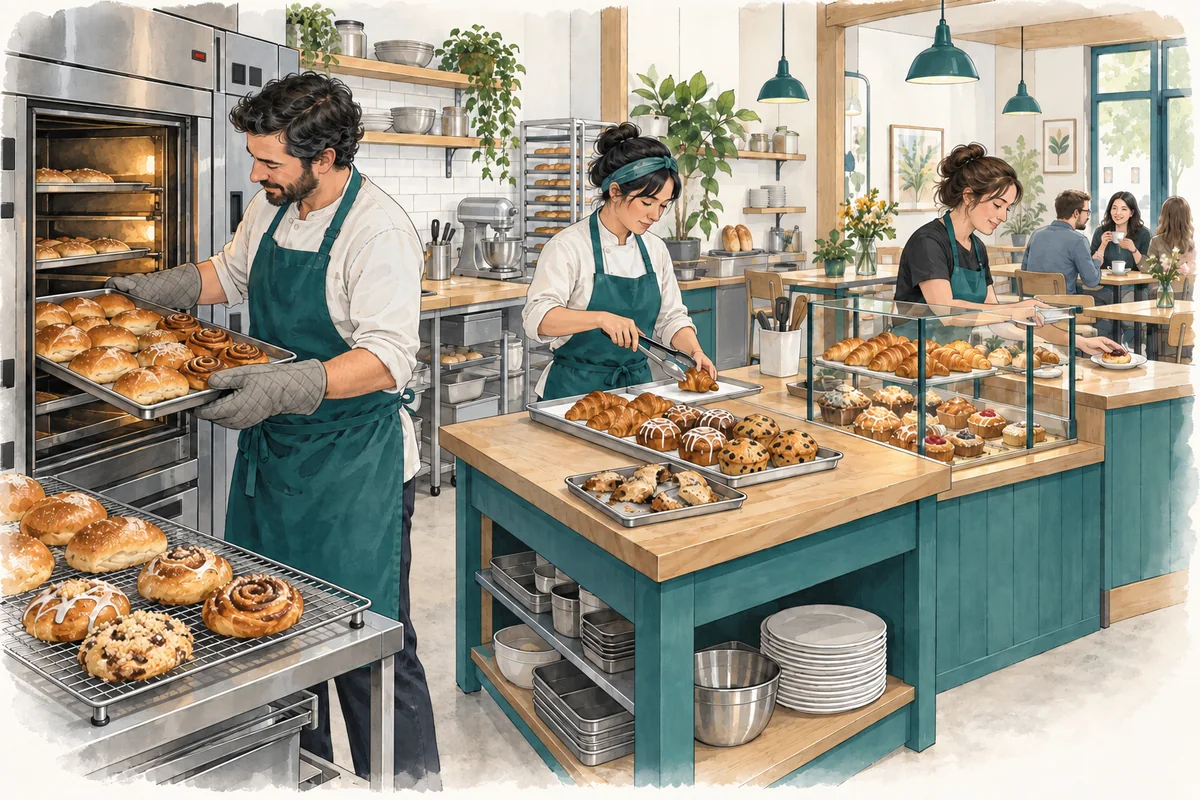
How will you manage unsold products and ingredient information?
Track production defects and unsold good output separately. A rejected bake calls for a process correction; good products left at closing may call for a different quantity, timing, range, or demand assumption. Both use ingredients, but they answer different management questions. Avoid hiding either loss inside an unexplained food-cost percentage.
Create ingredient records from recipes and supplier information, and decide how staff will respond to customer questions. Include ingredient substitutions and shared tools in the opening training. FDA research identifies allergen cross-contact as a retail food-safety issue and shows that cleaning methods affect transfer; a quick visual wipe is not evidence for an allergen-free claim. Review appropriate procedures for the operation. FDA allergen cleaning research.
The model assumes production losses and unsold output rather than treating every baked item as revenue. Its baking, seating, and waste guide explains the financial mechanism. Opening records should replace assumed rates with observations as soon as enough relevant evidence exists.
Who works before the cafe opens and after it closes?
Start the staffing plan at the first preparation task, not the first customer arrival. Then connect bakery production with beverage service, counter transactions, table clearing, washing, and closing. Identify who can cover a late bake or an absent counter worker without leaving another essential function unattended.
The selected case funds eight full-time equivalents, including a paid owner-manager, bakers, counter/barista staff, and steward/preparation relief. That is a budget structure, not a verified roster for your menu. Build individual shifts and check local wage and scheduling requirements; support tasks and owner administration need funded time even when they do not directly produce an item for sale.
Rehearse the handoff from bakers to counter staff. Staff need to know what is ready, what is delayed, what has sold out, and which substitutions are permitted. A production plan that works only when the head baker personally answers every counter question is not yet ready for a busy opening service.
How should production evidence change the budget and opening decision?
Obtain quotes for the installed system, including ventilation, utilities, refrigeration, display, washing, racks, smallwares, and the customer area. The case budgets $279,000 of initial capital spending and $371,000 of equity, without debt. Those are analytical case values; they do not establish local retrofit cost or the funding needed by another bakery cafe.
Build the cash schedule from the real installation and training sequence. The saved model starts its selected eligible trading days and capital purchases in January 2027; that monthly convention is not proof that the site can be fitted out and opened on that timetable. Delayed sales can consume cash while committed rent, payroll, and asset payments continue.
Open when the relevant approvals, commissioned equipment, repeatable core recipes, supplier arrangements, paid roster, and revised cash plan agree. Use early sales to refine bake timing and quantities before adding wholesale or delivery work. Those channels need their own capacity allocation, packing, payment terms, and distribution costs, as the private-label bakery working-capital guide illustrates for a different format.