This guide uses three selected U.S. planning cases to examine those choices. It does not estimate the market for every type of bakery or rank the formats by profitability. A cake studio, home bakery, or franchise would need its own operating scope.
Who do you want to sell to?
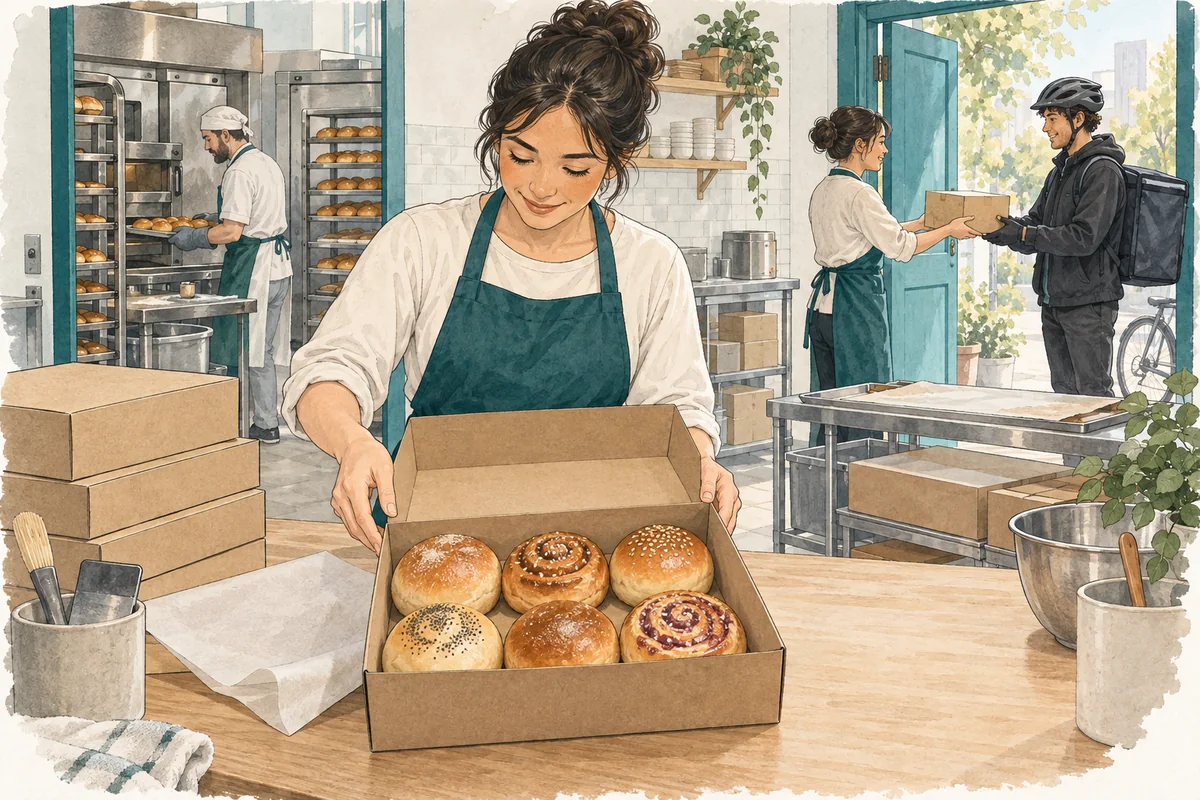
The bakery cafe case combines products made on site with seated pastry and beverage sales. The delivery-focused bakery case instead sells a six-piece breakfast box through its own online channel. The private-label bakery case manufactures bread for external customers under their brands.
Those are different commercial conversations. A cafe must give guests a reason to visit and return. Direct delivery must persuade customers to order the box and accept its delivered price. Private-label sales must agree a specification and delivery obligation with a business buyer.
On a narrow screen, scroll within the table to compare the three bakery choices.
| Decision | Bakery cafe | Direct delivery bakery | Private-label bakery |
|---|---|---|---|
| Buyer relationship | Guest chooses a visit and items | Customer chooses your branded box | Business customer orders its branded product |
| Completed sale | Pastry and beverage service | Fulfilled box order with retained delivery charge | Accepted loaves delivered externally |
| Operating focus | Baking plus seating, drinks, and counter service | Baking, packing, dispatch, and carrier availability | Repeatable production, packing, acceptance, and delivery |
| Stock boundary | Rejects and unsold goods are not finished inventory | No overnight finished-goods inventory in the case | Owned raw materials, work in process, and finished goods |
| Key commercial proof | Repeat visits and purchases at the intended offer | Paid orders and product condition after delivery | Agreed specification, demand, acceptance, and payment terms |
Choose the relationship you can support, not merely the product you most enjoy making. Contract manufacturing requires customer-account and specification work; retail ownership adds hospitality or direct consumer marketing. Each can be attractive to a different operator without being inherently easier.
Do you want to run a guest experience or an order operation?
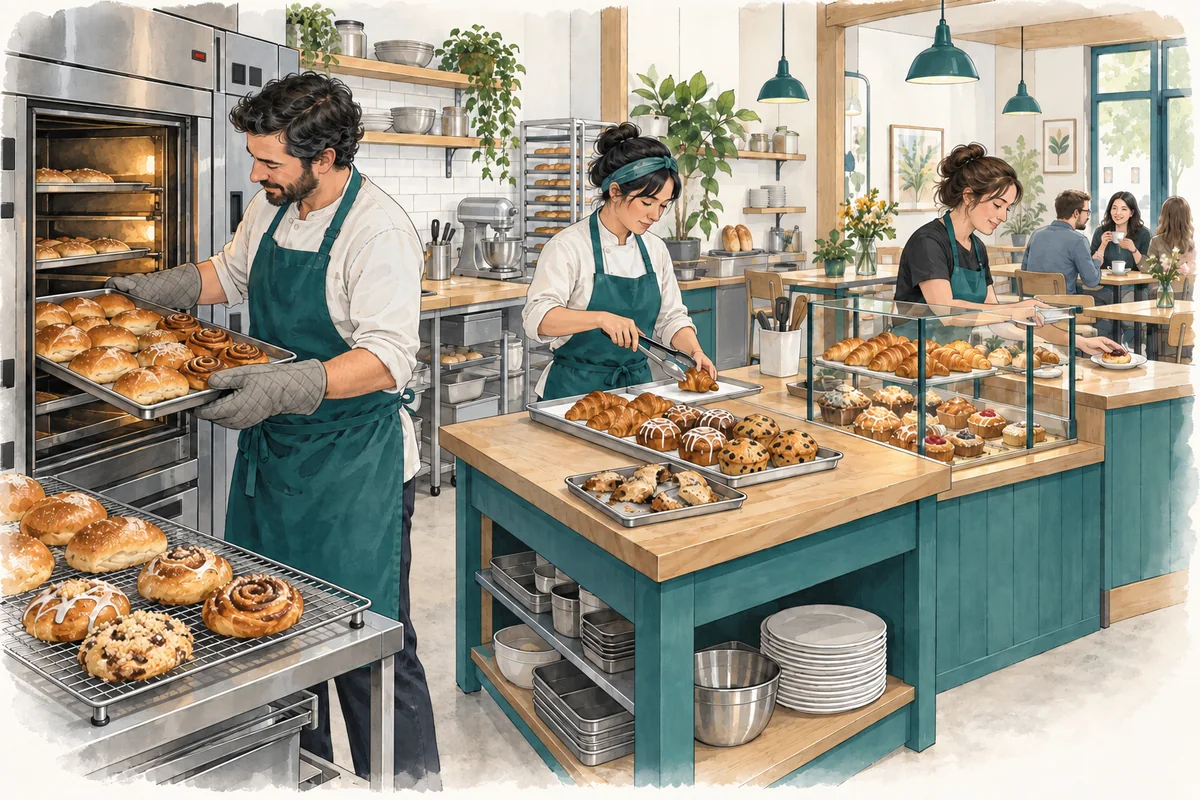
A bakery cafe commits you to two connected activities. Baking must supply the planned assortment, while the customer-facing team handles orders, drinks, clearing, and the room. In the selected case, mixing, proofing, baking, seating, beverage service, and counter capacity can each restrict the number of guests served.
A delivery operation removes the seated experience but adds another completion step. Products must be packed for the offered journey and handed over within available dispatch and carrier windows. The model pays contracted couriers separately from the delivery charge collected from customers; that charge is not automatically pure margin.
To evaluate fit, observe a batch from ingredient preparation through the final customer handover. Record where products wait, who checks them, and which tasks need the owner. A concept that has only specified oven output has not yet specified a bakery business.
Would making another company’s product suit you?
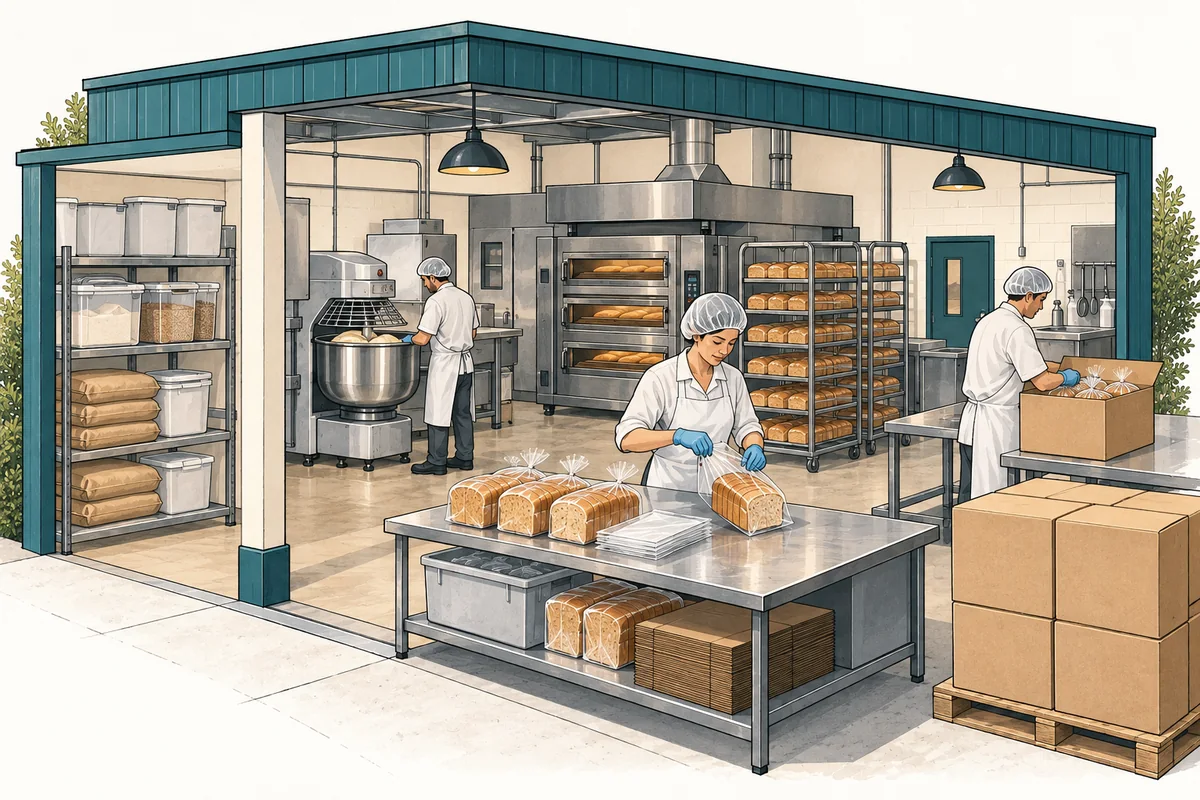
Private-label production may fit an operator who prefers repeatable manufacturing and business relationships to running a public shop. In this case, the bakery buys the inputs, carries the stock, and earns revenue only when accepted loaves are delivered. Producing a loaf or moving it between internal stages is not a sale.
That distinction changes the commercial questions. What specification must the loaf meet, how is acceptance established, who bears a rejected batch, and when is payment due? A potential customer’s interest is useful evidence, but it is not a committed production schedule or an agreed acceptance process.
The selected plant has separate production, packing, quality, and sanitation roles. Its inventory ledger also tracks work awaiting completion or acceptance. Adding a wholesale account to a cafe may be possible, but this manufacturing design cannot be assumed to fit unused retail oven time without a separate capacity and responsibility review.
What happens to products that are made but not sold?
Ask this before comparing selling prices. The cafe case separates production rejects from good products that remain unsold. Both consume ingredients without earning revenue. The delivery case similarly includes separate production and unsold allowances and assumes no overnight finished-goods stock.
Private-label manufacturing has a different stock boundary. Materials, work in process, and finished goods remain owned until the relevant sale or loss occurs. Some eligible production costs are held in inventory, but the factory still pays wages and operating bills. Accounting deferral does not provide cash to fund the next batch.
Even displayed gross margins have different scopes. The private-label model retains a materials-only gross-profit subtotal; it is not a fully absorbed manufacturing margin. Compare the complete operating and cash requirements, rather than choosing a format from that percentage. The private-label working-capital guide explains the timing in more detail.
What would make the idea ready for a detailed plan?
Identify one target buyer, a defined assortment, and a credible route to that buyer. For a cafe, investigate repeat visits and assortment demand. For delivery, test the ordered product at the end of the journey. For private label, establish product specifications, trial acceptance, and realistic ordering and payment terms.
Confirm the regulatory classification of the actual activities with the appropriate authorities. The FDA’s food-business overview distinguishes retail establishments from manufacturing and packing activities and explains that registration requirements have exemptions. A retail concept should not be assumed to settle the requirements of a separate manufacturing operation.
Only then size equipment, paid staffing, stock, and funding around that offer. A useful shortlist connects baking capability to a buyer and a repeatable fulfillment process. It does not rely on a broad claim that baked goods sell well or that one impressive batch proves a sustainable business.