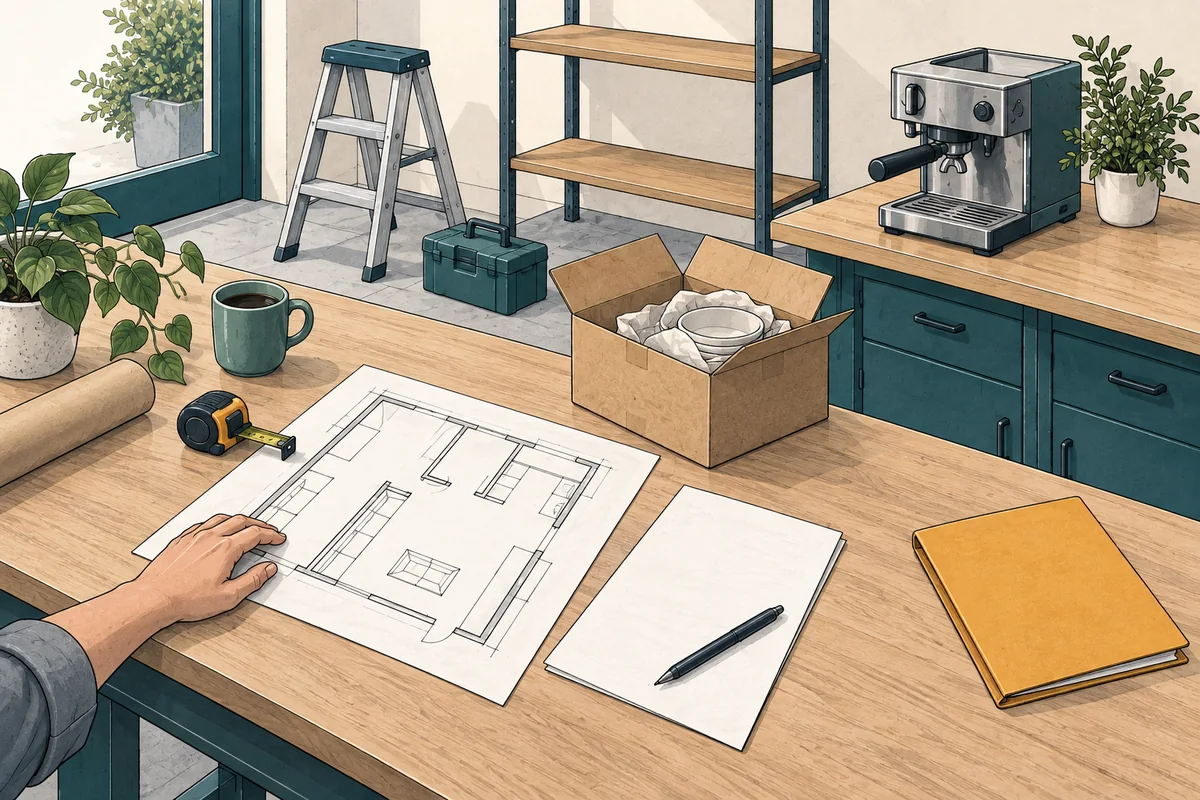
What is the selection criterion?
Here, a format qualifies when customers normally receive the goods or service away from the operator’s production or service base. The criterion concerns customer access, not ownership of real estate. A leased kitchen can qualify; a pickup counter normally does not, because customers visit the operator to collect their purchase.
The selected examples are documented U.S. planning cases: marketplace food delivery, employer-paid workplace coffee, private-label bread manufacturing and local bakery delivery. They demonstrate distinct operating structures. Their budgets do not establish which option is cheapest or suitable for an unexamined location.
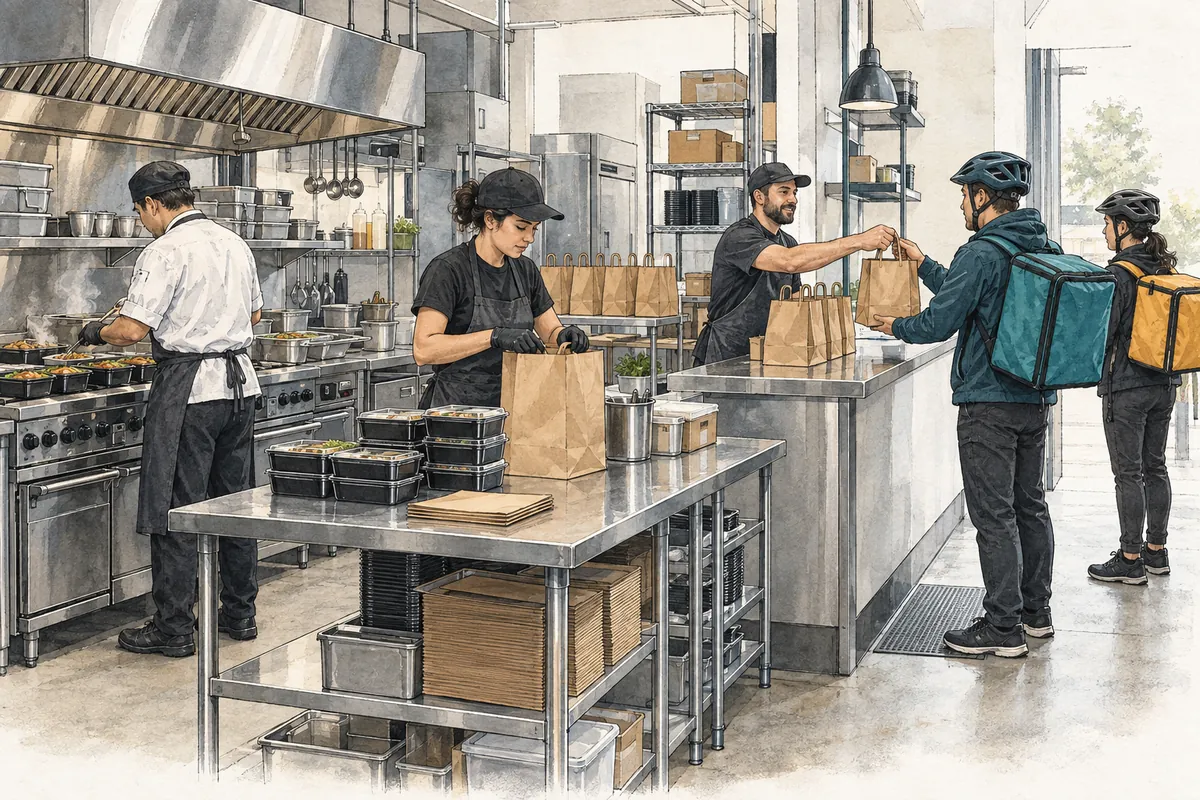
How do the formats shift the operating commitment?
A delivery-only kitchen trades dining-room access for preparation, dispatch and available marketplace couriers. Gross merchant food sales and commission expenses remain separate. Removing seats does not remove cooking space, packing labor or the need to commission equipment.
Employer-paid workplace coffee delivers an ongoing service at employer sites. The operator owns stations and funds driver and technician coverage. The employer invoice combines supplied beverage charges and site service fees; there is no employee retail checkout to add a second sale.
When is production the main customer commitment?
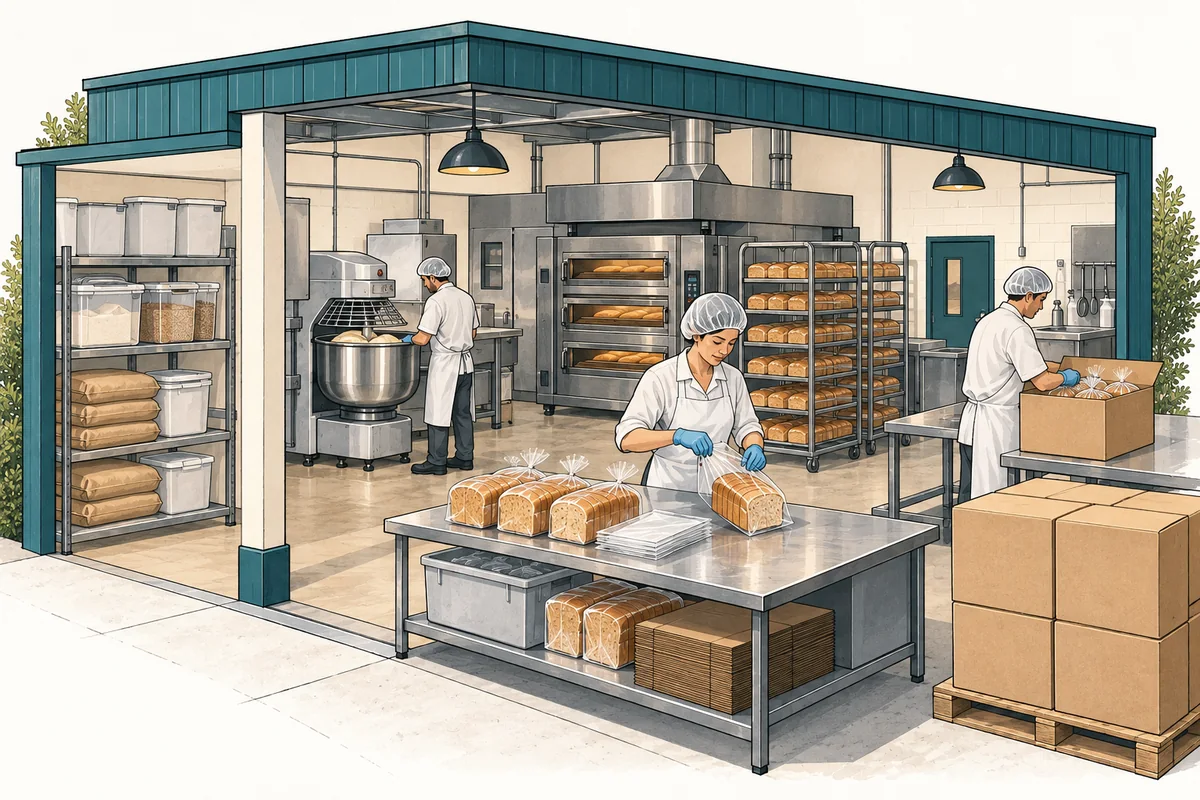
A private-label bakery produces under customer brands and earns sales when accepted external goods transfer. The operator still owns materials and working capital in the saved case. Acceptance holds, stock and payment terms matter even when customers never visit the factory.
A local delivery-focused bakery sells one food box per fulfilled order through its own storefront. Customers pay the outsourced courier directly in this case. Merchant delivery-fee revenue, an owned fleet and national parcel shipping are excluded; they should not appear in a combined budget without a separate operating design.
What should you compare before choosing?
Compare the sale unit, payment timing, shared bottleneck, site obligations and who owns delivery or stock. A delivery order, serviced employer location and accepted manufacturing shipment consume different resources. Adding the complete forecasts of several formats can duplicate the owner, equipment, premises and customers.
Ask whether the proposed location and service arrangement support the actual fulfillment promise. Obtain the relevant permissions and quotations for that arrangement, then test funded staffing and monthly cash. Browse the operating-format catalogue to compare structures; lack of a customer-facing storefront is one selection criterion rather than a forecast of low startup cost.