This guide compares five selected U.S. planning cases. Their assumptions illustrate different responsibilities; they are not a ranking of startup costs or expected returns. The goal is to identify a format worth investigating, not to select a business because one forecast displays an attractive margin.
What is the customer actually buying?
Define the occasion in a sentence: a hosted dinner, a meal collected on the way home, food delivered to an address, a catered event, or a limited-run chef experience. Each promise sets a different boundary around the work you must perform and the customer relationship you must develop.
A cuisine is compatible with several of these promises, but changing the service channel changes more than packaging. The selected pickup case sells individual and family orders; the catering case sells an agreed event package. Their customers, scheduling decisions, and units of sale should not share one generic “meals per day” forecast.
On a narrow screen, scroll within the table to compare the five operating choices.
| Format | Customer promise | Evidence that would support the choice | Commitment to examine |
|---|---|---|---|
| Full-service dining | Food and a hosted visit | Reasons to visit, dwell patterns, and repeat dining demand | Dining space and paid kitchen/service coverage |
| Counter pickup | A prepared order ready for collection | A reachable pickup audience and a menu that travels well | Preparation, packing, counter time, and access |
| Delivery-only kitchen | A meal delivered to the customer | Channel demand and contribution after fulfillment costs | Platform or direct acquisition and courier availability |
| Off-site catering | An agreed package at the customer's event | Qualified event buyers and repeatable package requirements | Crew, transport, equipment, dates, and contract scope |
| Temporary residency | A dining experience during a defined run | An audience plus suitable host access for the actual dates | Host agreement, mobilization, and costs outside service months |
Use the table to eliminate contradictions. A concept built around leisurely hospitality needs a different operating plan from one promising predictable pickup. Offering both may be possible, but it requires explicitly sharing the kitchen and funding the additional service work.
Which daily work are you willing to manage?
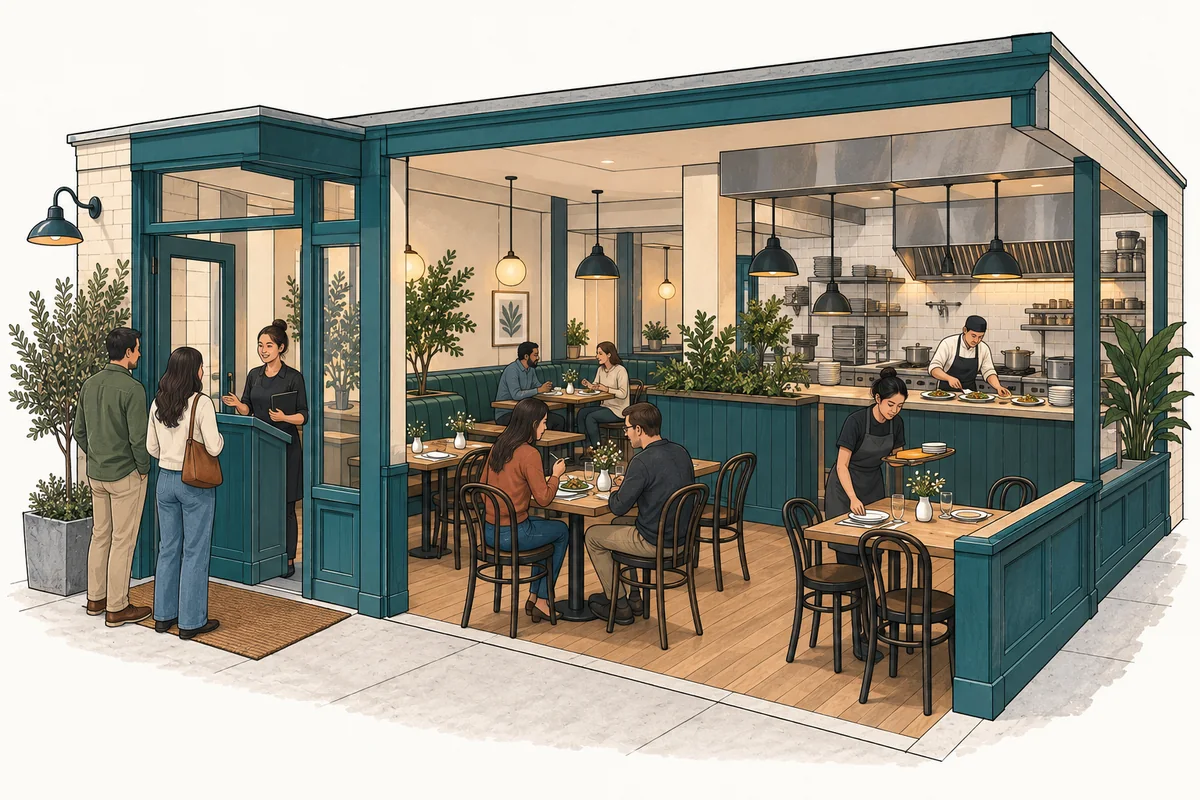
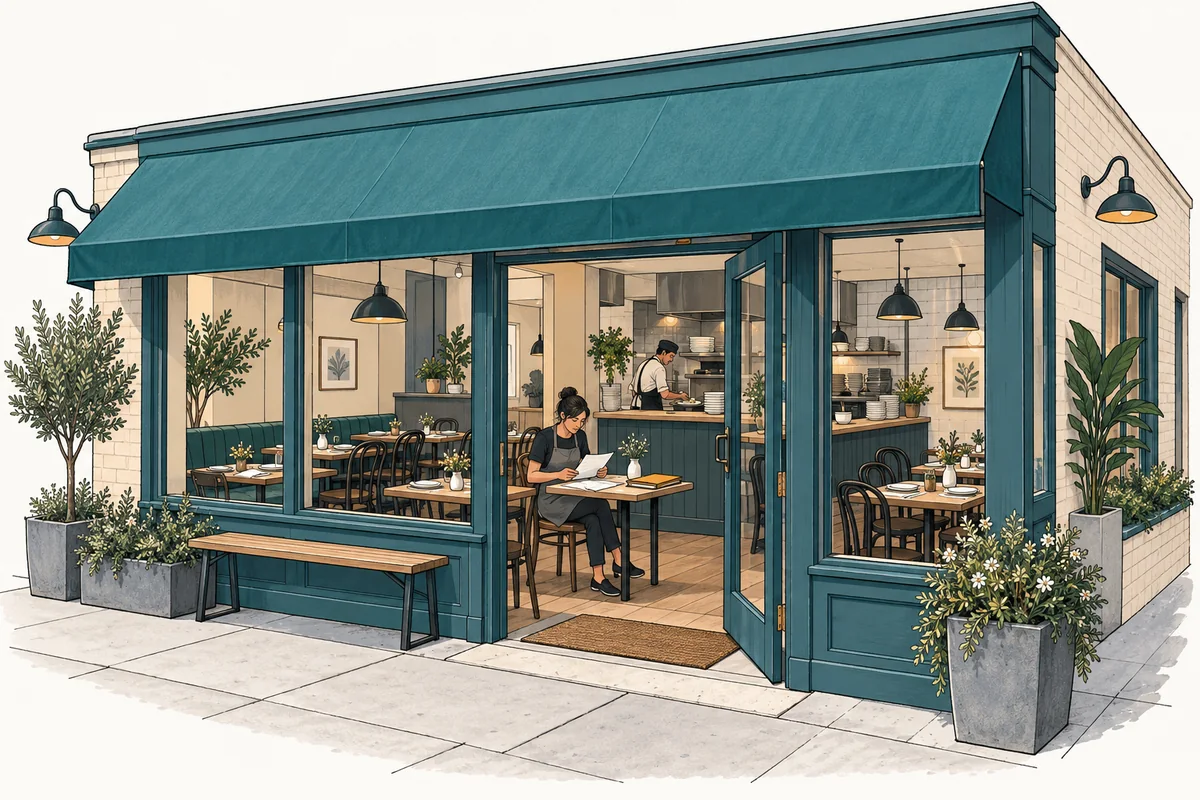
The full-service restaurant case combines lunch and dinner demand with seating, kitchen output, and funded service staff. Its business is not simply a room with tables: the dining experience commits the operator to hosting and serving guests as well as preparing food.
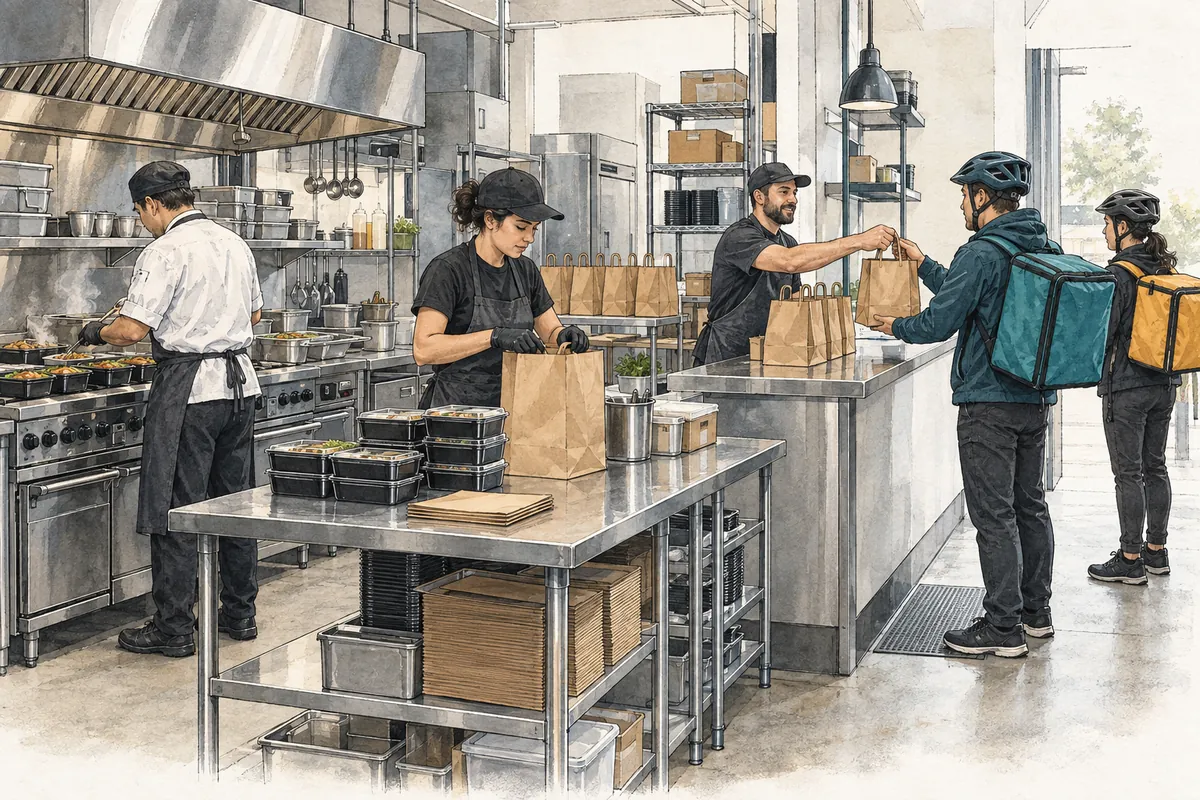
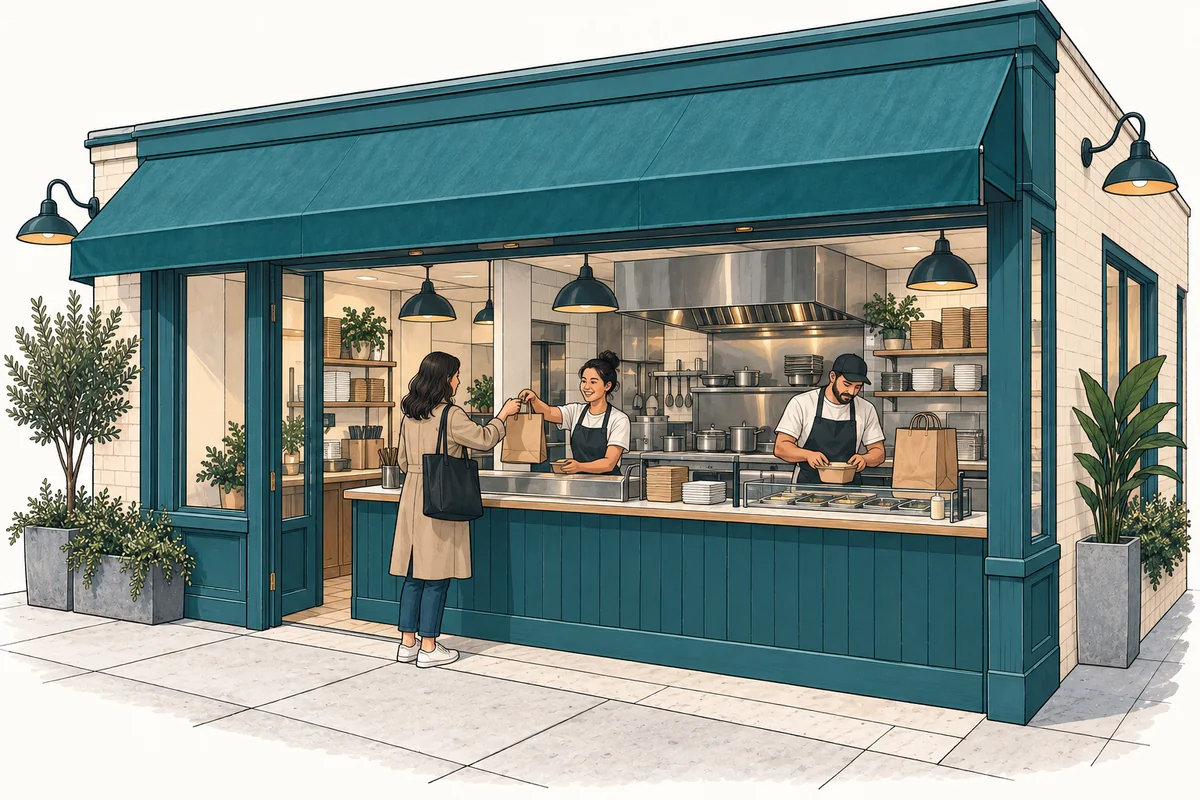
The counter-service takeout case removes dining seats and table service. It still funds an owner, preparation, cooking, utility work, and a pickup counter. Prepaid collection can change handling time, but orders still need to be produced and handed over accurately.
The delivery-only kitchen case replaces the customer-facing dining room with dispatch and contracted delivery. A marketplace may bring orders under one commercial arrangement; direct ordering creates a different acquisition and fulfillment responsibility. Evaluate those arrangements before treating delivery as an easy way to avoid front-of-house work.
A useful founder test is to describe an ordinary busy service and a disappointing one. Who covers absences, resolves a wrong order, prepares for the next shift, and answers customers? If the plan works only when the owner performs several unpaid jobs simultaneously, the format is not yet adequately specified.
Would bookings or a finite run suit the concept better?
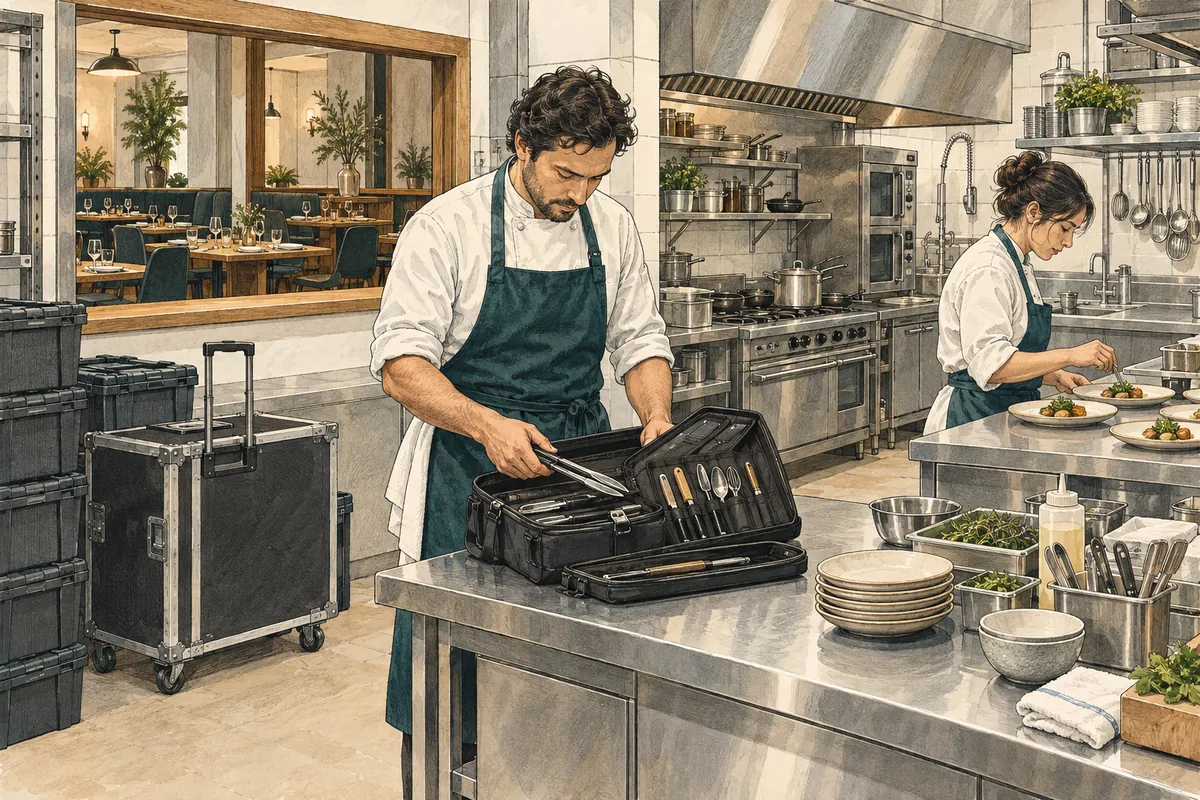
An off-site catering operation can be a better fit for someone who wants to sell defined packages to event buyers rather than depend on daily walk-in traffic. That is a suitability judgment, not a forecast of easier sales. The selected case must still match accepted events to kitchen, crew, transport, and reusable equipment.
A pop-up or guest-chef residency instead relies on access to someone else’s equipped premises. In the selected case, the meal operator earns its own food revenue and pays the host. Preparation, service, reset, and teardown must all fit the contracted access window.
Temporary occupancy is a boundary, not a guarantee of limited financial exposure. The residency case retains owner and overhead commitments outside its trading months and does not achieve durable capital recovery over its five-year forecast. Define what stops, what continues, and what requires renewal when the run ends.
What evidence would make one format more convincing?
Investigate the people who would buy the specific occasion, their alternatives, and the price they consider acceptable. Those questions align with the SBA’s market-research guidance. The practical application here is to test a customer promise before extending a spreadsheet’s demand line.
For pickup, ask potential customers where collection fits into their routine and what would prevent it. For dining, test the reason to stay and return. For catering, examine qualified inquiries and package requirements. For a residency, separate the chef’s existing audience from people merely expressing interest in an announcement.
Where a permitted trial is feasible, record completed purchases, repeat behavior, preparation time, and failures at handover. A popular social post is evidence of attention; it does not by itself establish paid demand at the price, place, and service conditions you intend to offer.
What belongs on the final shortlist?
Keep a format only when you can explain the customer, the offer, the sales channel, the responsible team, and the premises or host arrangement. Then build a case with paid owner labor and enough cash for the selected opening and operating commitments.
Verify the activity and location with the relevant authorities before relying on a site or host’s suitability. The SBA notes that licensing requirements vary with activities and location; this comparison establishes neither a permit list nor an approval for a particular operation.
Use the existing demand-and-capacity guide for the next question: whether the chosen resources can fulfill the proposed demand. Choosing a format answers what business you intend to run. A defensible operating and cash plan then tests whether that particular version can work.